Table of Contents
About the Workshop
Concepts of Quantum and Spacetime
March 9 — 12, 2026 @ KEK, Tsukuba, Japan.
The two fundamental questions—“What is quantum?” and “What is spacetime?”—are deeply intertwined. On one hand, the formulation and interpretation of quantum theory depend both implicitly and explicitly on our conceptions of time and space. On the other hand, we believe that fully taking into account the quantum character of nature will force us to revise our understanding of spacetime. These two conceptual problems lie at the heart of the unsolved challenge of how to quantize classical spacetime, and conversely, how (semi-) classical descriptions of spacetime emerge from quantum theory. Furthermore, if the entire matter-spacetime system is a kind of quantum many-body system, thermodynamics—which governs its statistical behaviors—should play a key role in elucidating these problems.
This workshop will discuss the question “How can quantum theory and spacetime be understood in a consistent manner?” from a fundamental and broad perspective. To tackle this challenge, we gather researchers in foundations of quantum theory, quantum gravity, and related fields from around the world, providing a "space and time" to share various ideas with open minds and engage in lively discussions. By exploring new concepts and principles, we hope to uncover directions to guide quantum theory over the next 100 years.
This workshop covers…
- Foundations of quantum theory
- Quantum gravity and emergence of spacetime
- Formulation of semi-classical gravity
- Experimental aspects of fundamental properties in nature and quantum gravity
- Foundations of quantum many-body systems and thermodynamics
- Other related topics are welcome.
This event is a workshop jointly organized by KEK Theory Center and RIKEN iTHEMS, and varieties of workshops are also being held at either KEK or RIKEN: WS1, WS2, WS3.
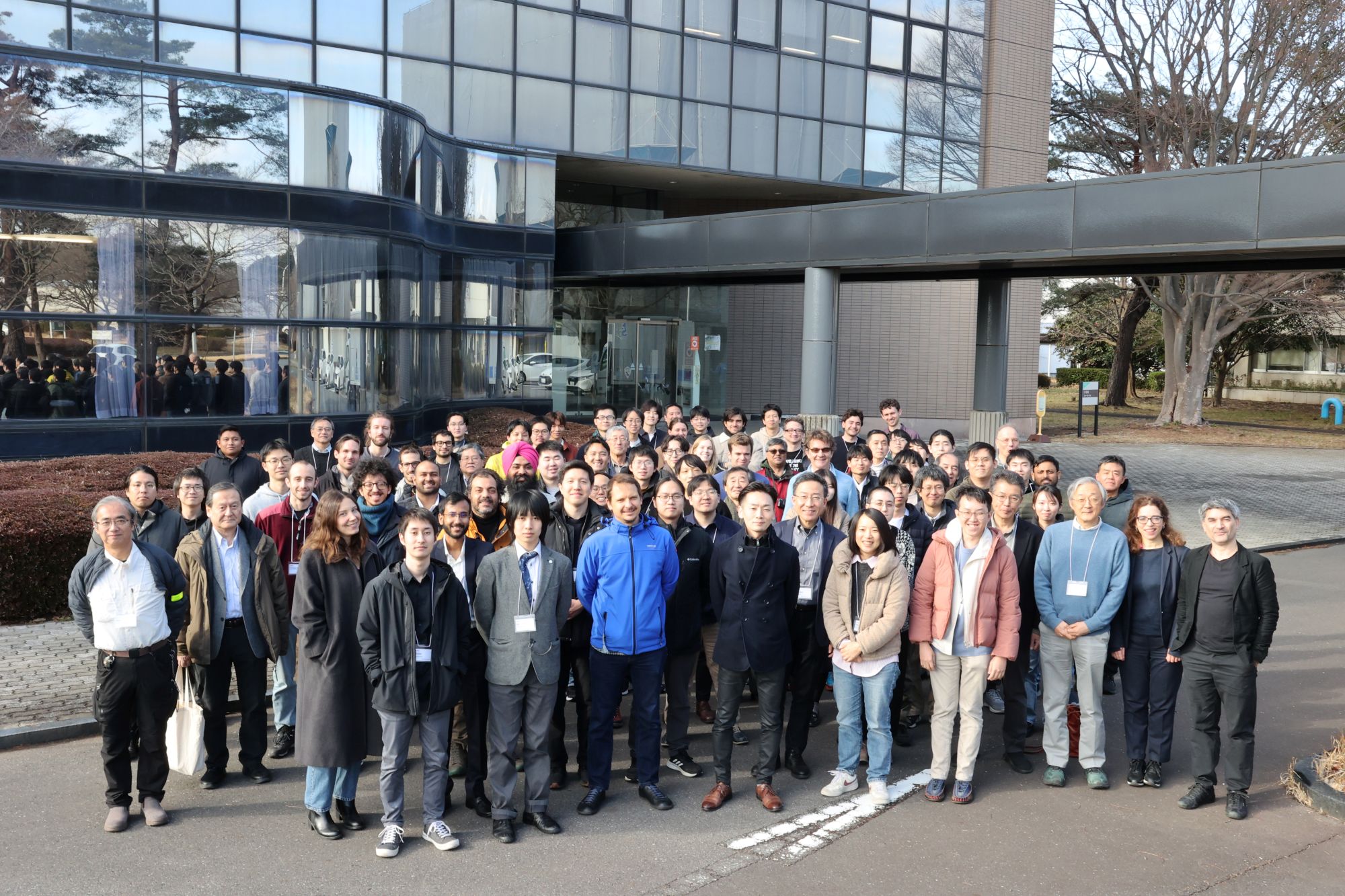
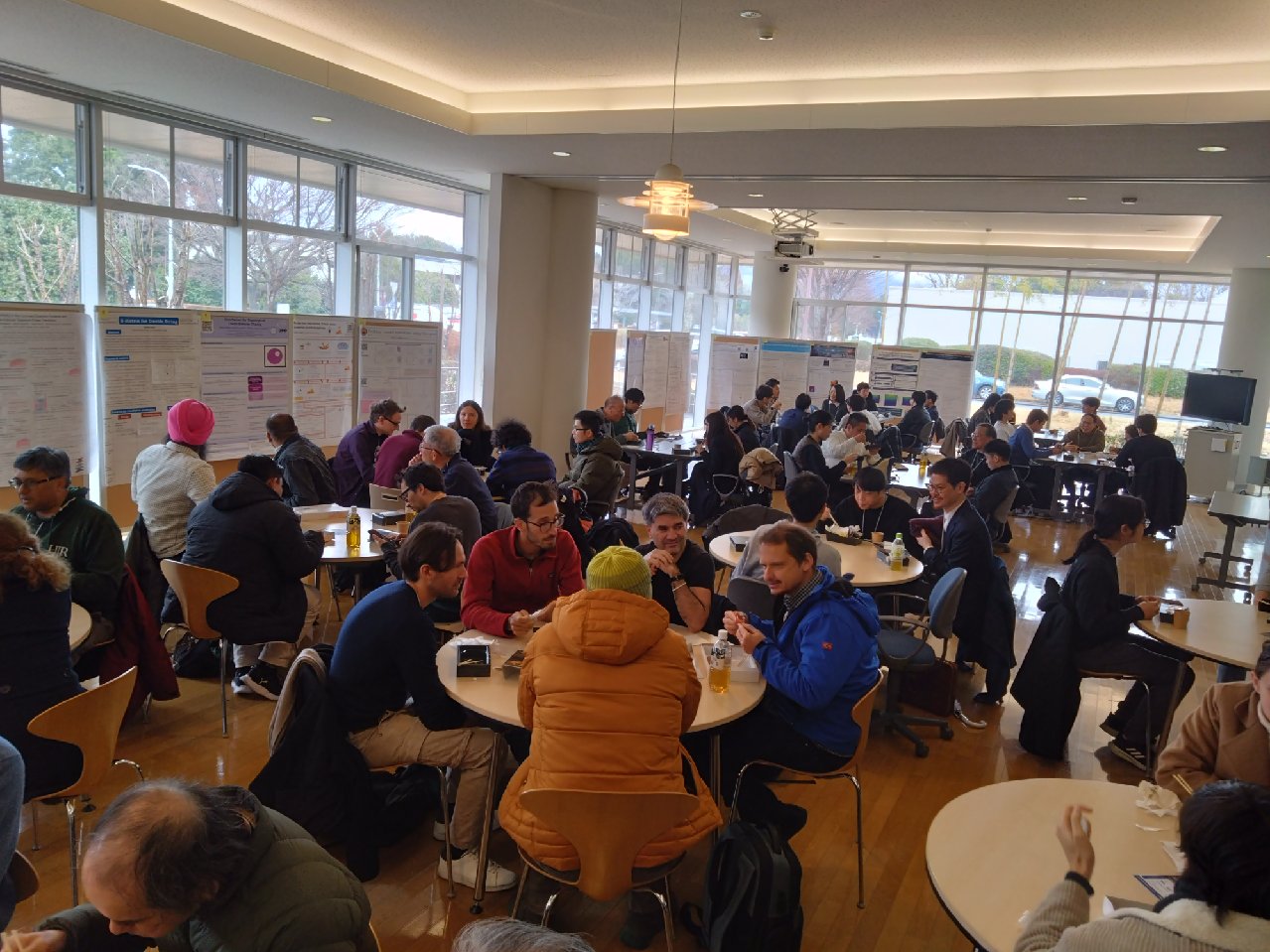
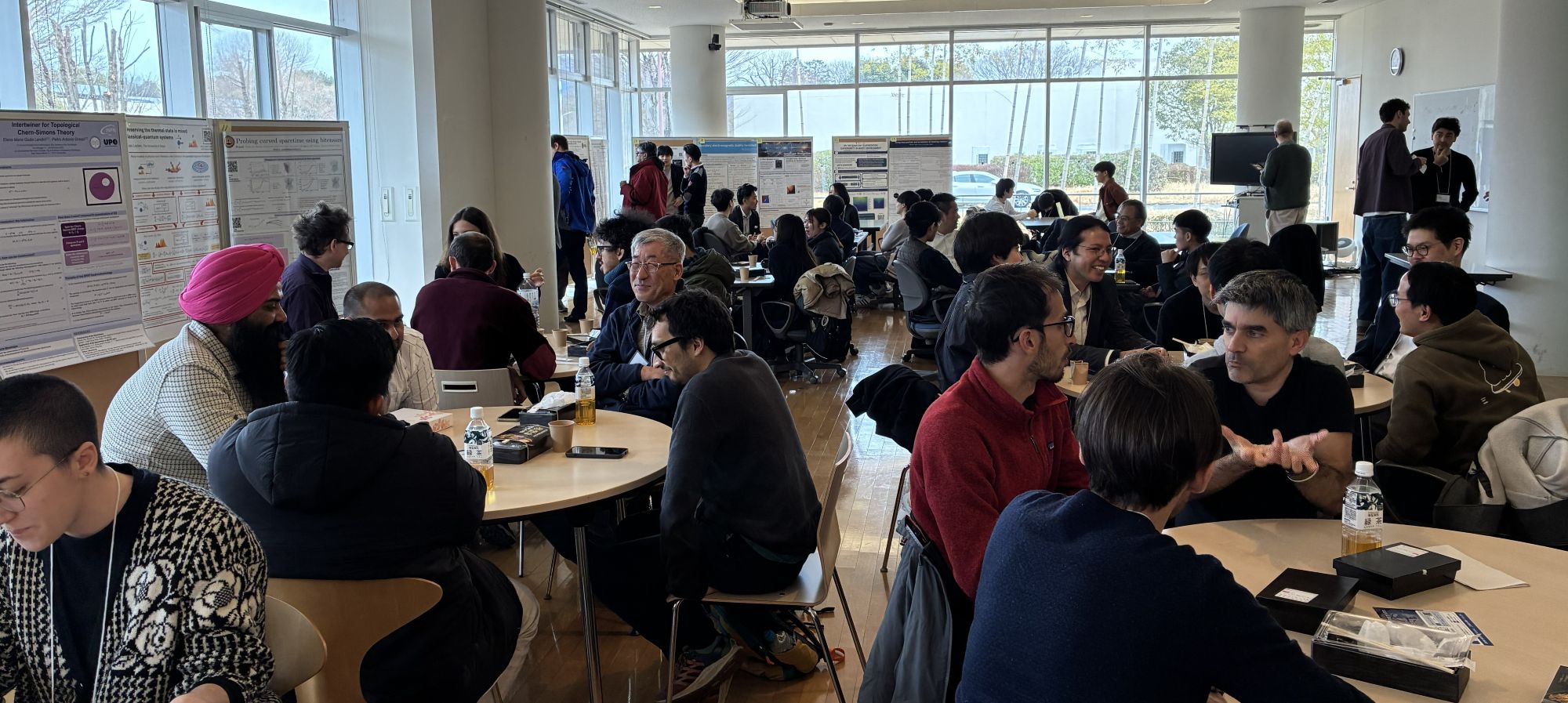
This workshop has ended successfully! About 90 researchers from diverse countries, generations, and fields came together. We are grateful for all the participants.
The motivation of this workshop was explained in Opening Session. Opening Session Slide
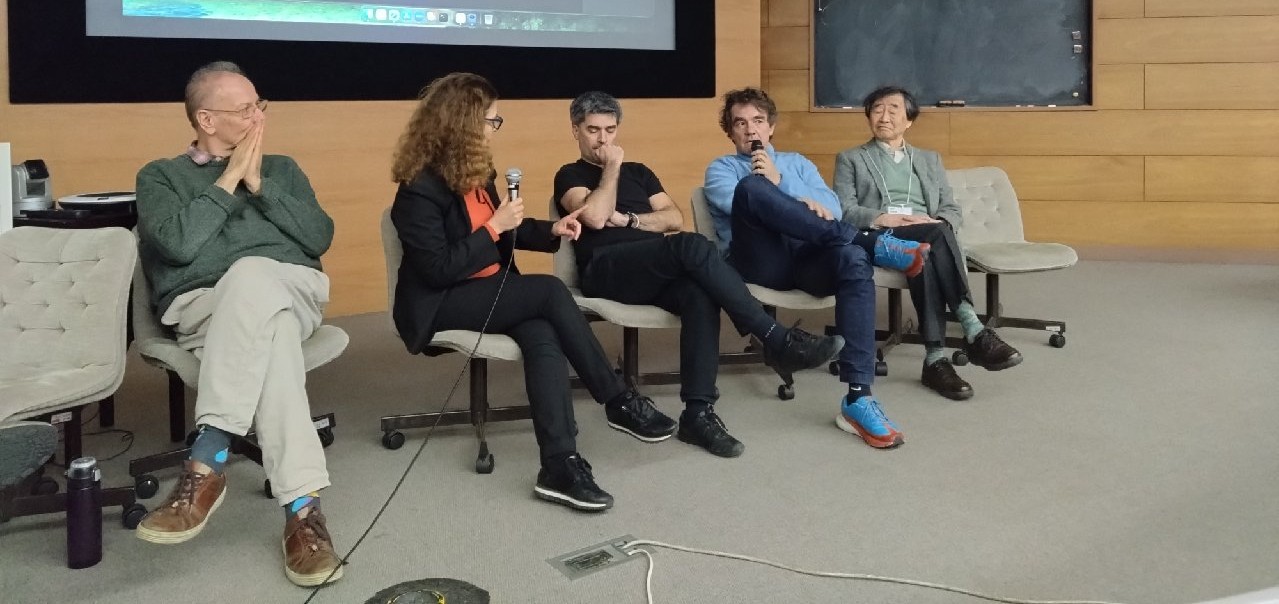
The panel discussion was exciting. Pannel Discussion Slide
This event was reviewed in Closing Session. Closing Session Slide
The files of one-hour talks, short talks, and poster presentations (for which we received permission) have been uploaded and available below.
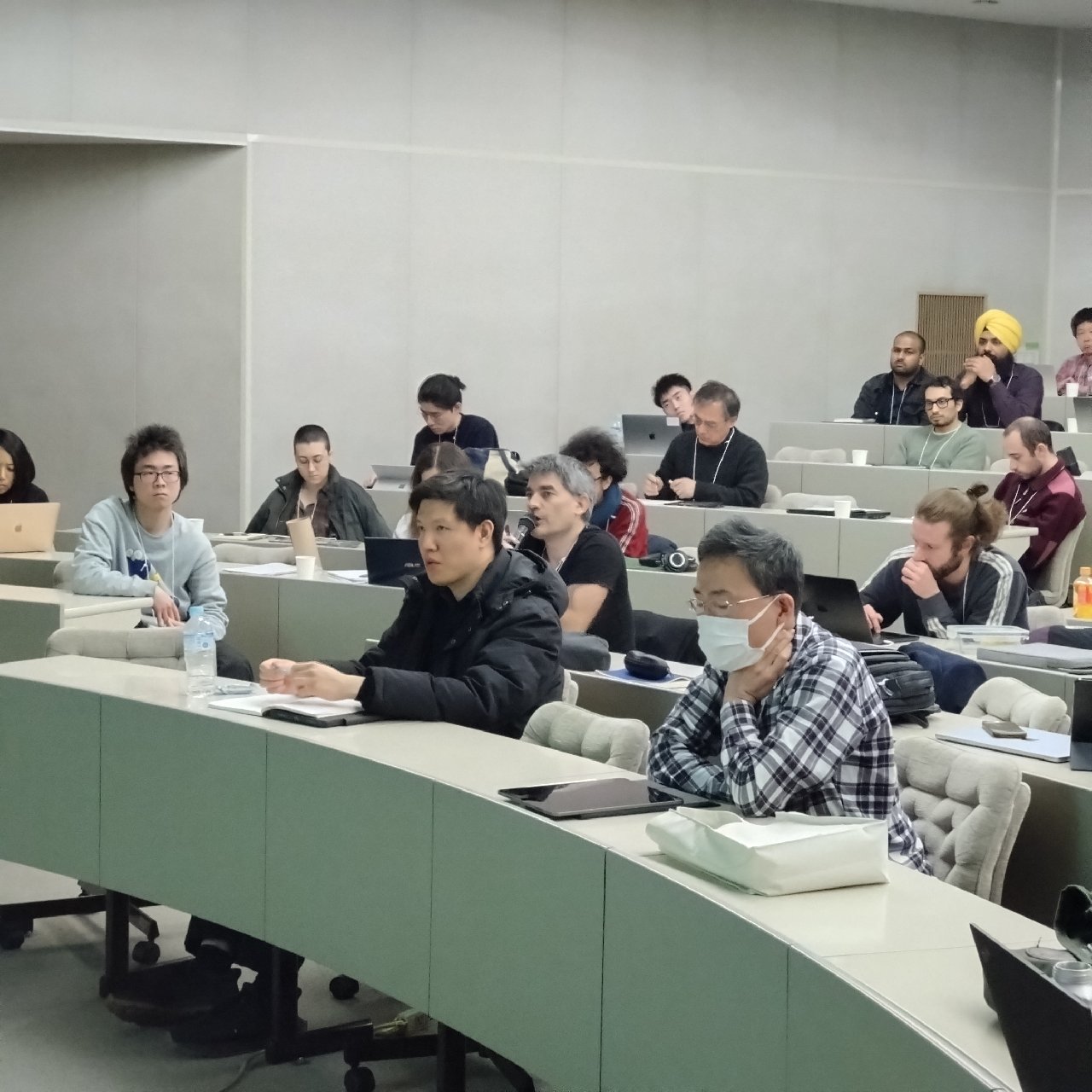
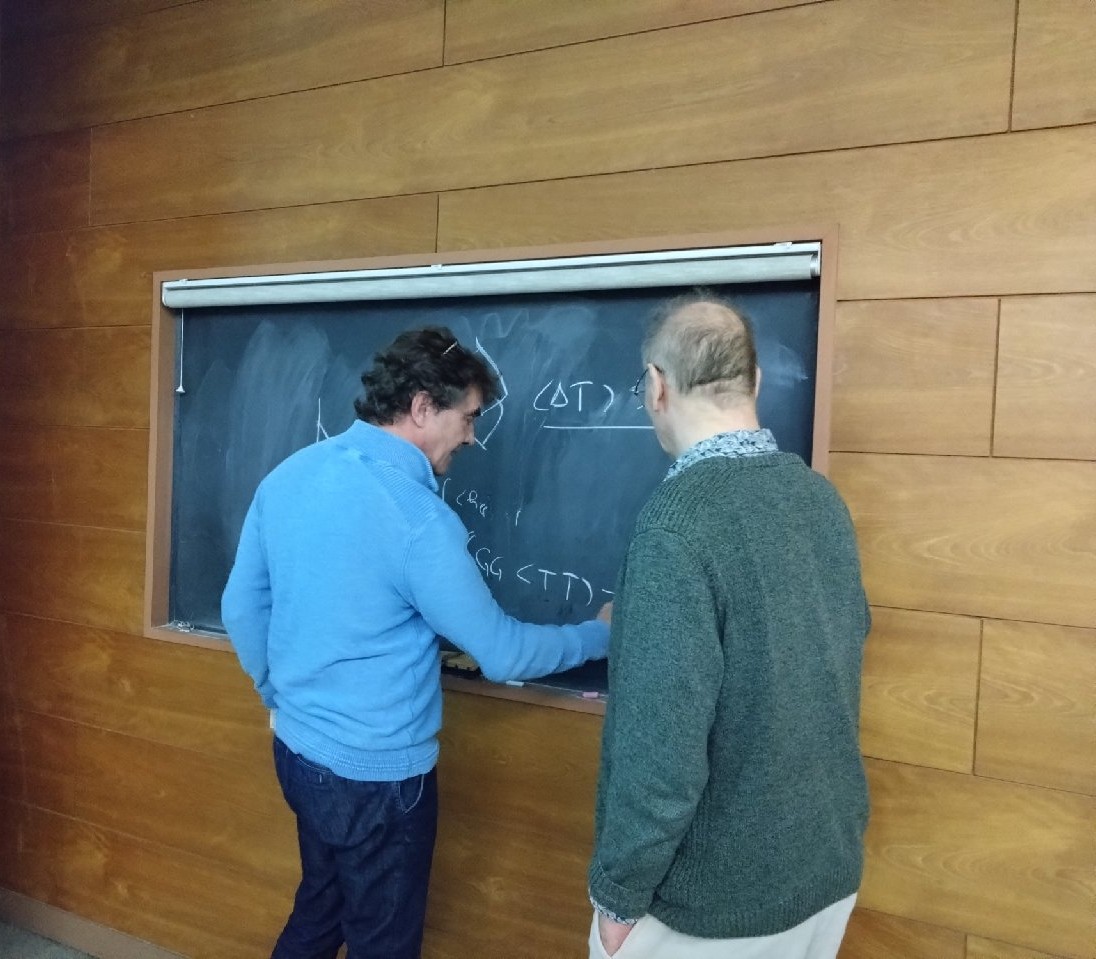
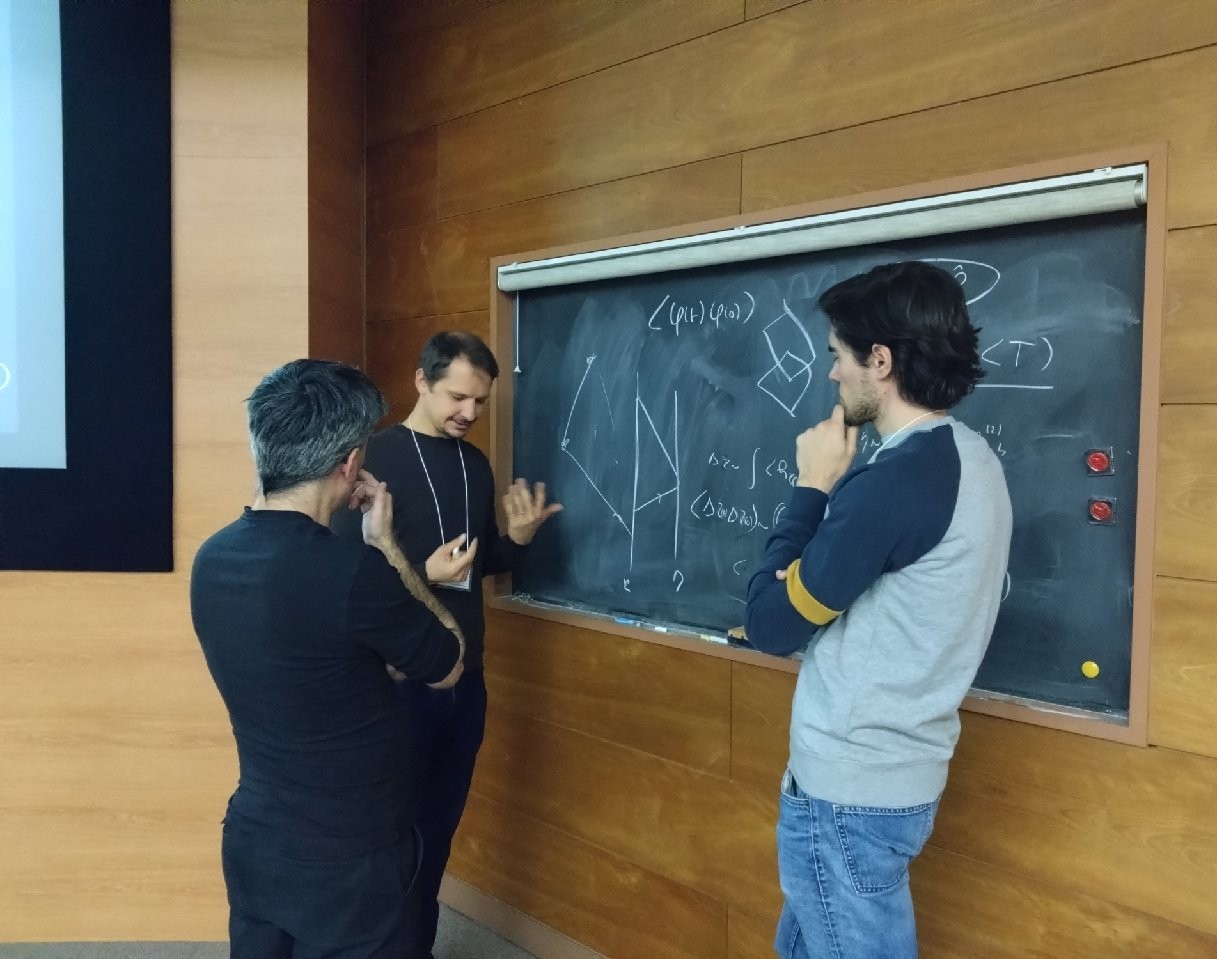
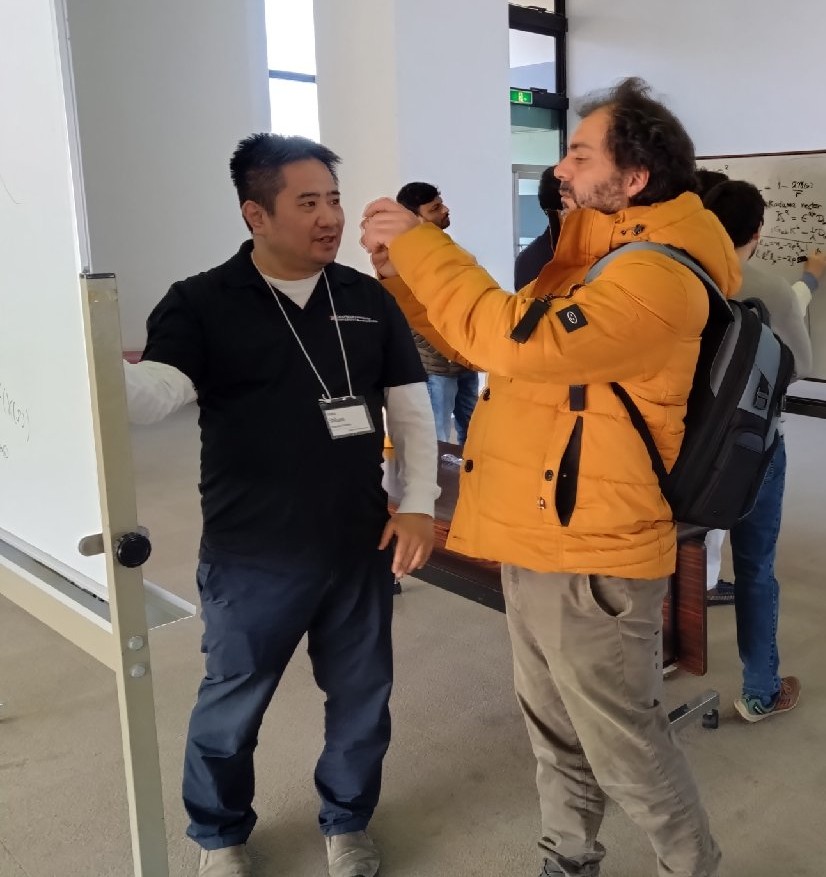
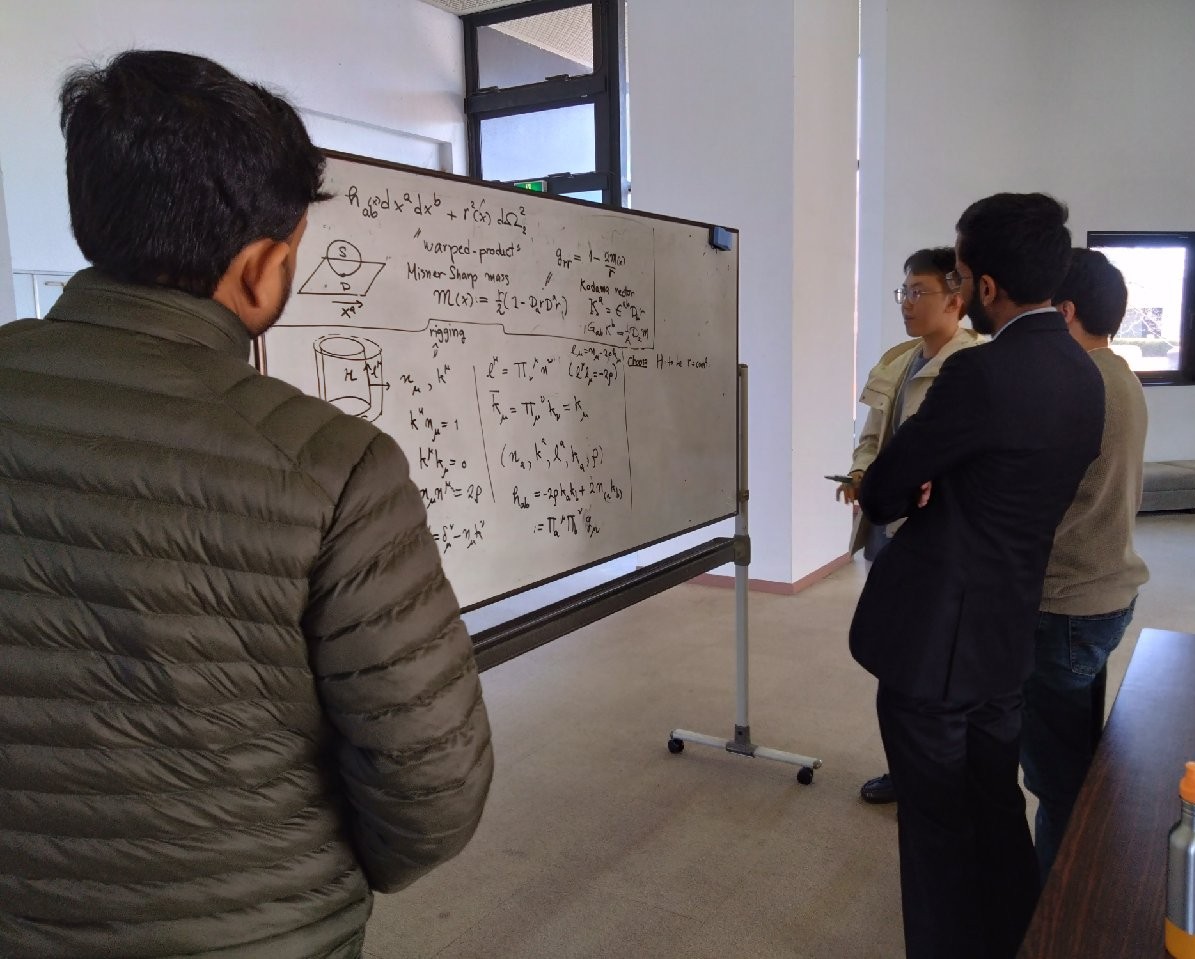
Photos during this event

One-hour talks
- Ginestra Bianconi (Queen Mary University of London)
Link
Talk Slide
"Gravity from Entropy"
Gravity is derived from the Gravity from Entropy (GfE) action coupling matter fields with geometry. The fundamental idea is to relate the metric of Lorentzian spacetime to a quantum operator, playing the role of an renormalizable effective density matrix and to describe the matter fields topologically, according to a Dirac-Kähler formalism, as the direct sum of a 0-form, a 1-form and a 2-form. While the geometry of spacetime is defined by its metric, the matter fields can be used to define an alternative metric, the metric induced by the matter fields, which geometrically describes the interplay between spacetime and matter. The proposed GfE Lagrangian is the Geometric Quantum Relative Entropy (GQRE) between the metric of spacetime expressing the information stored in the true metric that can be codified by the metric induced by the matter fields and curvature. The modified Einstein equations obtained from this action reduce to the Einstein equations with zero cosmological constant in the regime of low coupling. By introducing the G-field, which acts as a set of Lagrangian multipliers, the proposed entropic action reduces to a dressed Einstein-Hilbert action with an emergent small and positive cosmological constant only dependent on the G-field. The obtained equations of modified gravity remain second order in the metric and in the G-field. A canonical quantization of this field theory could bring new insights into quantum gravity while further research might clarify the role that the G-field could have for dark energy and dark matter. We furthermore show that the geometrical quantum relative entropy associated to the Schwarzschild metric, which provides an approximate solution of the modified gravity equations, follows the area law for large Schwarzschild radius.
Bianconi, G., 2025. Gravity from entropy. Physical Review D, 111(6), p.066001. https://journals.aps.org/prd/abstract/10.1103/PhysRevD.111.066001
Bianconi, G., 2025. The quantum relative entropy of the Schwarzschild black hole and the area law. Entropy, 27(3), p.266. https://www.mdpi.com/1099-4300/27/3/266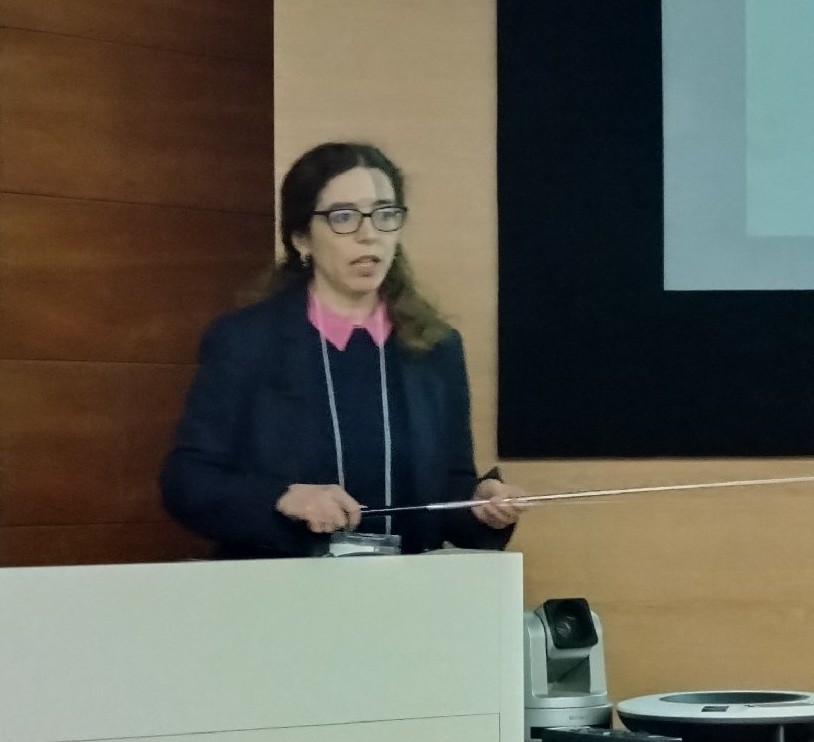
- Marios Christodoulou (Institute for Quantum Optics and Quantum Information)
Link1,
Link2
Talk Slide
“Observables in Table Top Quantum Gravity”
General relativity poses a long-standing puzzle: without a fixed spacetime to use as reference, it is notoriously challenging to define physical observables. [1] gave a first definitive result about this decades–long question, providing a very sharp formulation of the ‘problem of observables’: in a precise sense of ‘definable’, provided by a branch of logic called descriptive set theory, diffeomorphism-invariants are not definable.
These difficulties notwithstanding, the problem of observables can be fully resolved for background independent theories defined on finite graphs, as we showed in [2]. Sets of complete observables can be constructed so that each seeks a connected subgraph structure -- local correlations. Geometrical information is fully encoded in background independent observables through this subtle interplay of global and local graph notions, a behavior we term glocal.
In this talk, we discuss the above results as to their relevance regarding: (i) notions of invariants under quantum coordinates, such as that appeared in [3] (ii) the epistemological relevance of Table Top Quantum Gravity protocols.
[1]https://journals.aps.org/prl/abstract/10.1103/PhysRevLett.131.171402
[2] https://arxiv.org/abs/2508.02346
[3] https://journals.aps.org/prl/abstract/10.1103/bnkn-4p3f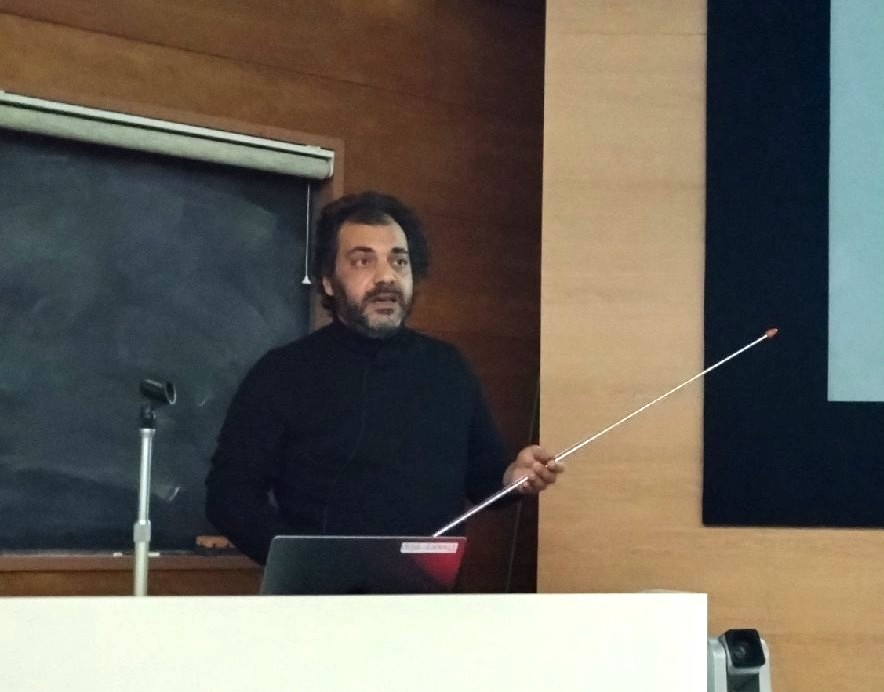
- Bob Coecke (Wolfson College, Oxford University) Link
Talk Slide
"From quantum picturalism, to education, AI, spatial cognition, and music" (online)
Over some 20 years we have developed a diagrammatic quantum formalism, sometimes referred to as quantum picturalism [1, 2]. We showed that this formalism enabled secondary school students to perform exceptionally well on an Oxford University post-grad quantum exam [3]. In 1935 John von Neumann denounced `his own’ Hilbert space based quantum formalism. Alternatives had been proposed, including by von Neumann himself, but none play a significant role in quantum theory today. Quantum picturalism on the other hand, is now widespread in quantum technology research, and in quantum foundations. Quantum picturalism follows Schrödinger’s focus on composition of systems rather than von Neumann’s focus on measurement. The same formalism has been used as the basis for cognition with applications to interpretation and generalisation for AI [4, 5], which can accommodate a compositional account on spacetime [5], and underpins the first piece of music to ever have been produced with a quantum computer [6].
[1] Bob Coecke and Aleks Kissinger (2017) Picturing Quantum Processes. Cambridge University Press.
[2] Bob Coecke and Stefano Gogioso (2022) Quantum in Pictures. Quantinuum.
[3] https://www.theguardian.com/science/2023/dec/16/physicist-bob-coecke-its-easier-to-convince-kids-than-adults-about-quantum-mechanics
[4] https://thequantuminsider.com/2024/09/18/quantinuum-unveils-first-contribution-toward-responsible-ai-uniting-power-of-its-quantum-processors-with-experimental-work-on-integrating-classical-quantum-computing/
[5] Vincent Wang and Bob Coecke (2021) Talking Space. https://arxiv.org/abs/2109.06554
[6] https://qspace.fqxi.org/articles/264/quanthovens-fifth
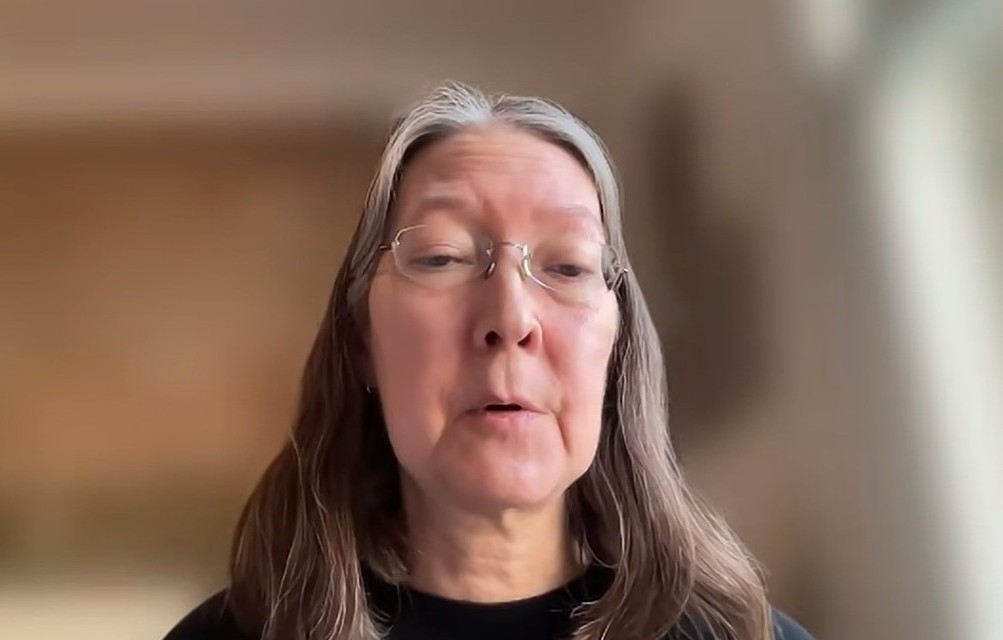
- Fay Dowker (Imperial College London) Link
Talk Slide
"What is the Gravitational Path Integral?" (online)
The project, started by Feynman, to base quantum theory fundamentally on the path integral or Sum Over Histories is a work in progress. One of the attractions of the path integral approach is that it holds out the vision of a unified conception of the physical world in which there is no distinction in principle between spacetime and matter: just include all physical elements in the ``histories’’ that are summed over. Easy! Well, not so easy of course. I will discuss what stage the project has reached as far as non-gravitational physics goes, and highlight some challenges—both technical and conceptual—that should be faced if we are to make progress in using the path integral as the foundational concept in quantum gravity.
- Justin Dressel (Chapman University)
Link
- cancelled due to unforeseen circumstances
"Quantum Measurement of Propagating Fields"
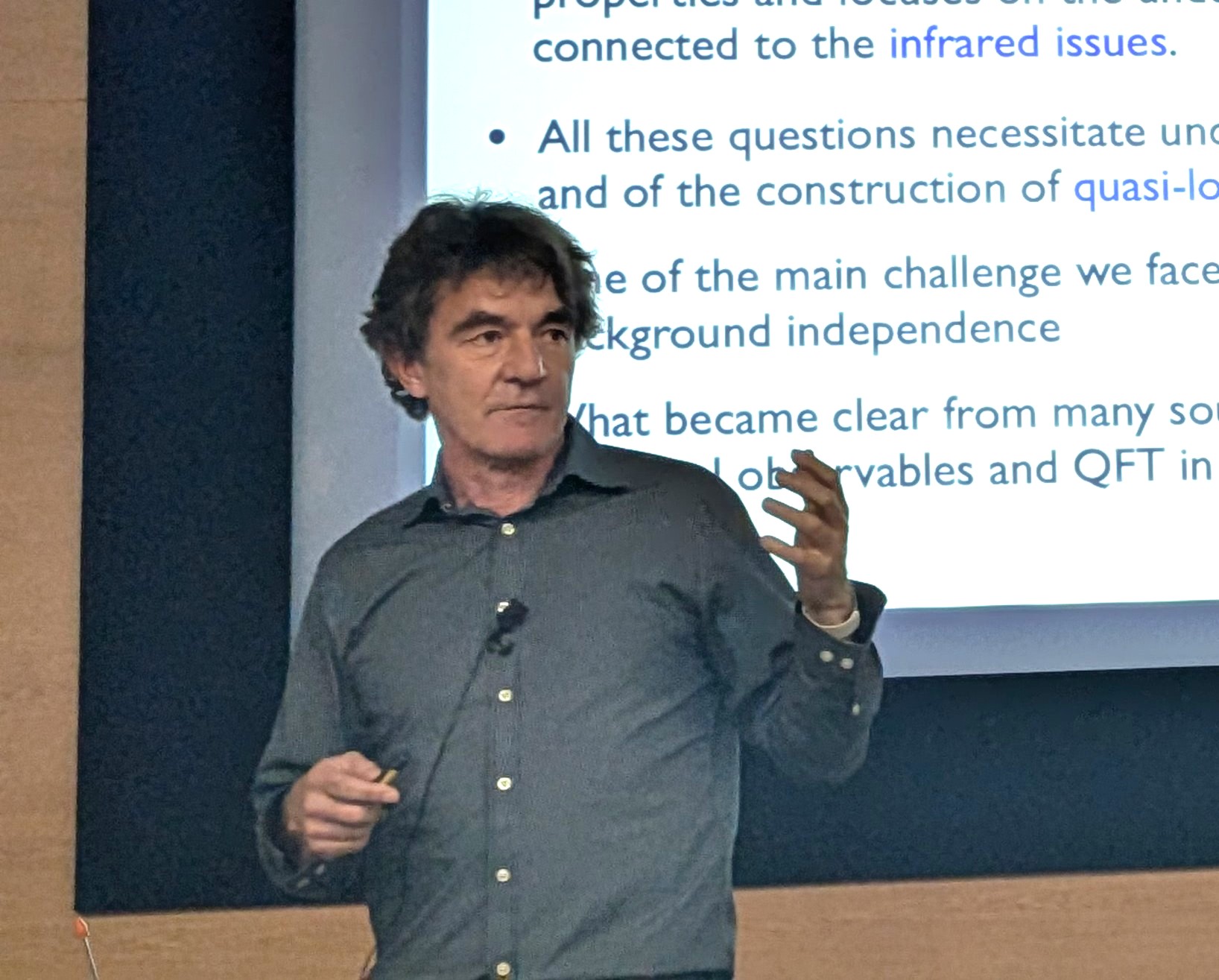
- Laurent Freidel (Perimeter Institute) Link
Talk Slide
"Quantum Null Ray: localized gauge invariant observables and covariant quantization"
In this talk, I'll review the construction of gravitational constraints and of the corresponding phase space along generalized Horizons. I will focus my expose on the study of the Raychauduri Constraint and its quantization, which describes the dynamics of quantum null rays. I will present a detailed construction of the null Ray phase space and the localized gauge-invariant observables through the process of internal dressing anchored on edge modes. I will show that the gauge invariant observables include the covariant area element as a generator of reorientation of the frame. I will also describe element of the quantization procedure of the gravitational constraint which can be achieved using two essential new tools: First the construction of a background independent version of the normal ordering and then the reabsorption of the quantum anomaly into an effective deformation of the gravitational phase space. If time permits, I'll comment on some new phenomenological possibilities associated with these results and more generally with the quantization of field theoretical reference frames.
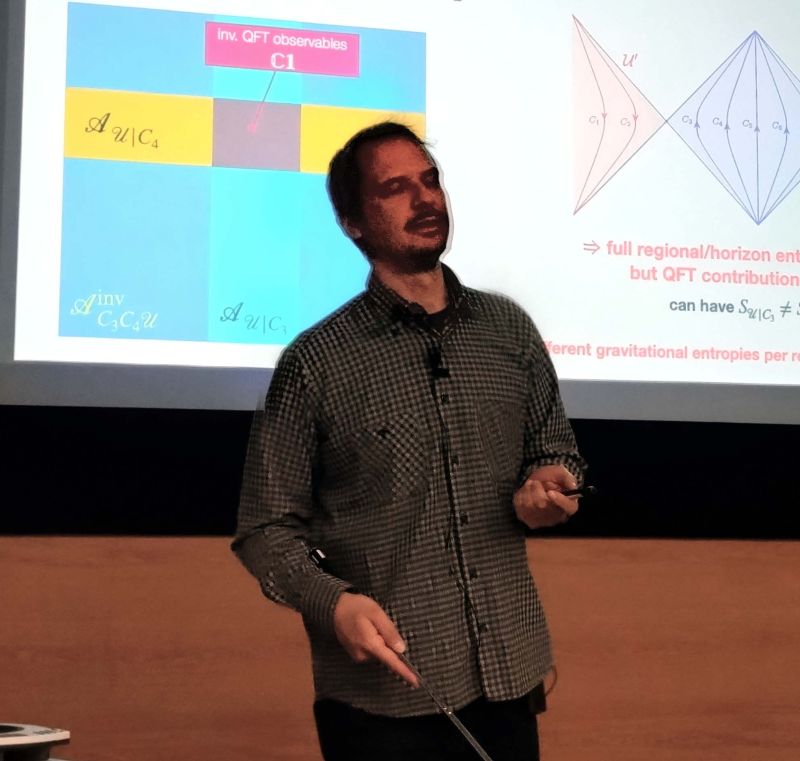
- Philipp Höhn (OIST) Link
Talk Slide
"Relational entanglement entropies in gauge theory and gravity"
Entanglement entropies in quantum field theory are typically computed using a regulator to control UV divergences. Recent work showed that describing regional field degrees of freedom relative to an “observer” in perturbative quantum gravity leads to an intrinsic regularization of entanglement entropies, sidestepping the need for introducing a regulator by hand. I will explain in which sense this is a relational definition of entanglement entropy, leading to the observation that gravitational entropies depend on the observer. The key for this observation is the identification of observers as quantum reference frames (QRFs). In the second part of the talk, I will then explain how such relational entanglement entropies also lead to advantages in gauge theory on a lattice, where UV divergences are absent. In this case, the QRFs are defined in terms of Wilson lines and, in contrast to previous nonrelational constructions, lead to regional factor algebras and ensuing fully distillable entanglement entropies. Finally, I will explain how one recovers the usual electric and magnetic center algebra constructions of nonrelational approaches as the part that all QRFs agree on and how this leads to an algebra and entropy hierarchy.
- Hidetoshi Katori (University of Tokyo)
Link
Talk Slide
“Optical lattice clocks to see curved spacetime”
Time and frequency are the most precisely measurable quantities in science. The continuous quest for higher precision in time and frequency measurements has advanced international standards and satellite navigation, providing the technological basis of today’s global society. Building on this foundation, optical clocks now achieve an unprecedented precision of 18 digits—equivalent to losing or gaining less than one second over the age of the universe. Such clocks redefine the frontier of measurement science and open new possibilities for exploring our world.
At this level of precision, a clock can sense the general relativistic effect of gravity, revealing how time flows differently at heights differing by just one centimeter on Earth. The frequency shift arising from gravity thus allows clocks to resolve variations in the Earth’s gravitational field—a capability known as chronometric leveling. This sensitivity enables mapping subtle changes in the Earth’s surface and mass distribution through precision frequency measurements, such as crustal deformation and tidal effects. Our recent work focuses on making these ultra-precise optical clocks compact, robust, and transportable, enabling measurements beyond the laboratory. In collaboration with Japanese industry, we have developed field-deployable systems capable of long-term autonomous operation. These efforts have reached the commercial production stage, with orders now open for compact optical lattice clock systems. We are also exploring techniques for continuous operation, which will further enhance precision and practical usability.
In the near future, networks of such advanced clocks could form a new measurement infrastructure—linking laboratories, satellites, and observatories—to monitor both spatial and temporal variations of the Earth’s surface, and to probe the limits of fundamental physics. Looking ahead, we aim to establish a new framework of spacetime engineering—an approach that treats relativistic spacetime itself as a new framework to be explored and utilized, leading to new sensing principles and real-world applications.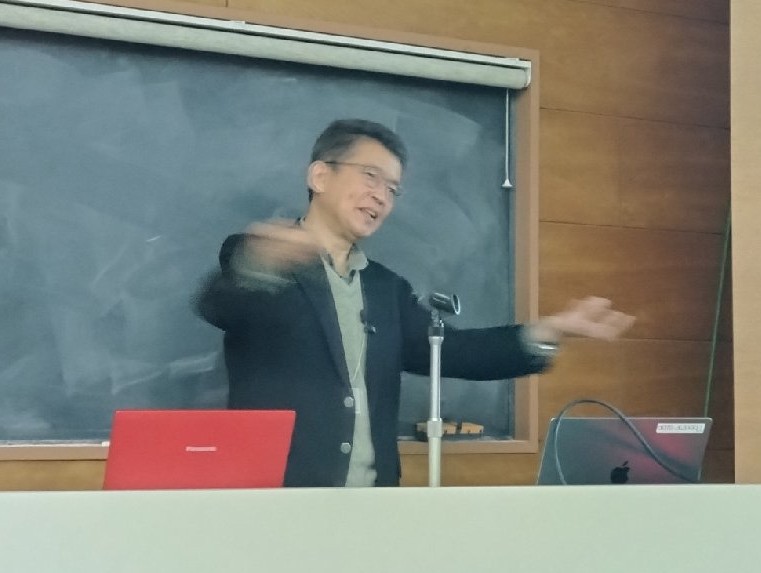
- Adrian Kent (University of Cambridge)
Link
Talk Slide
"Problems and possibilities for semi-classical gravity theories"
Moller-Rosenfeld semi-classical gravity postulates a classical metric coupled to the expectation value of the quantum matter stress-energy via the Einstein equations. It continues to attract attention given the many problems of standard quantum gravity theories. However, semi-classical gravity also has many apparent problems.
If we assume unitary (Everettian) quantum theory, as originally proposed, it is inconsistent with astronomical observation and terrestrial experiment. If quantum theory is combined with some measurement or collapse postulate, stress-energy conservation is generally violated. Unless this can be avoided or otherwise handled, it leads to an inconsistency in the Einstein equations. Semi-classical gravity theories are also nonlinear, and it is often claimed that such theories necessarily violate causality via superluminal signalling and also violate the second law of thermodynamics.
I discuss these problems, describe how some of them can be resolved and others might be, and describe experimental tests that test semi-classical gravity theories in new regimes.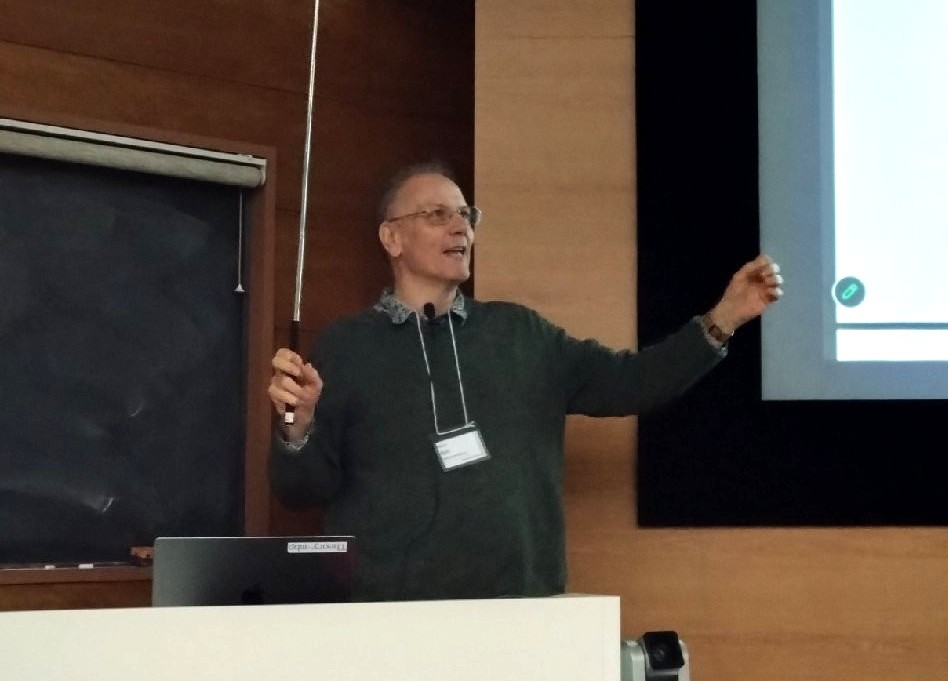
- Akira Matsumura (Kyushu University) Link1, Link2
Talk Slide
"Gravity sourced by quantum matter: a subjective overview"
With recent advances in quantum information science, there has been growing interest in experimentally testing the gravitational field sourced by quantum matter. In particular, the quantum superposition of gravitational fields and the gravitationally induced quantum entanglement have emerged as key experimental targets. In this talk, I outline theoretical progress towards experimental tests of gravity sourced by quantum matter, and survey models of such gravity, including recently proposed classical–quantum gravity models.
- Shunji Matsuura (RIKEN) Link
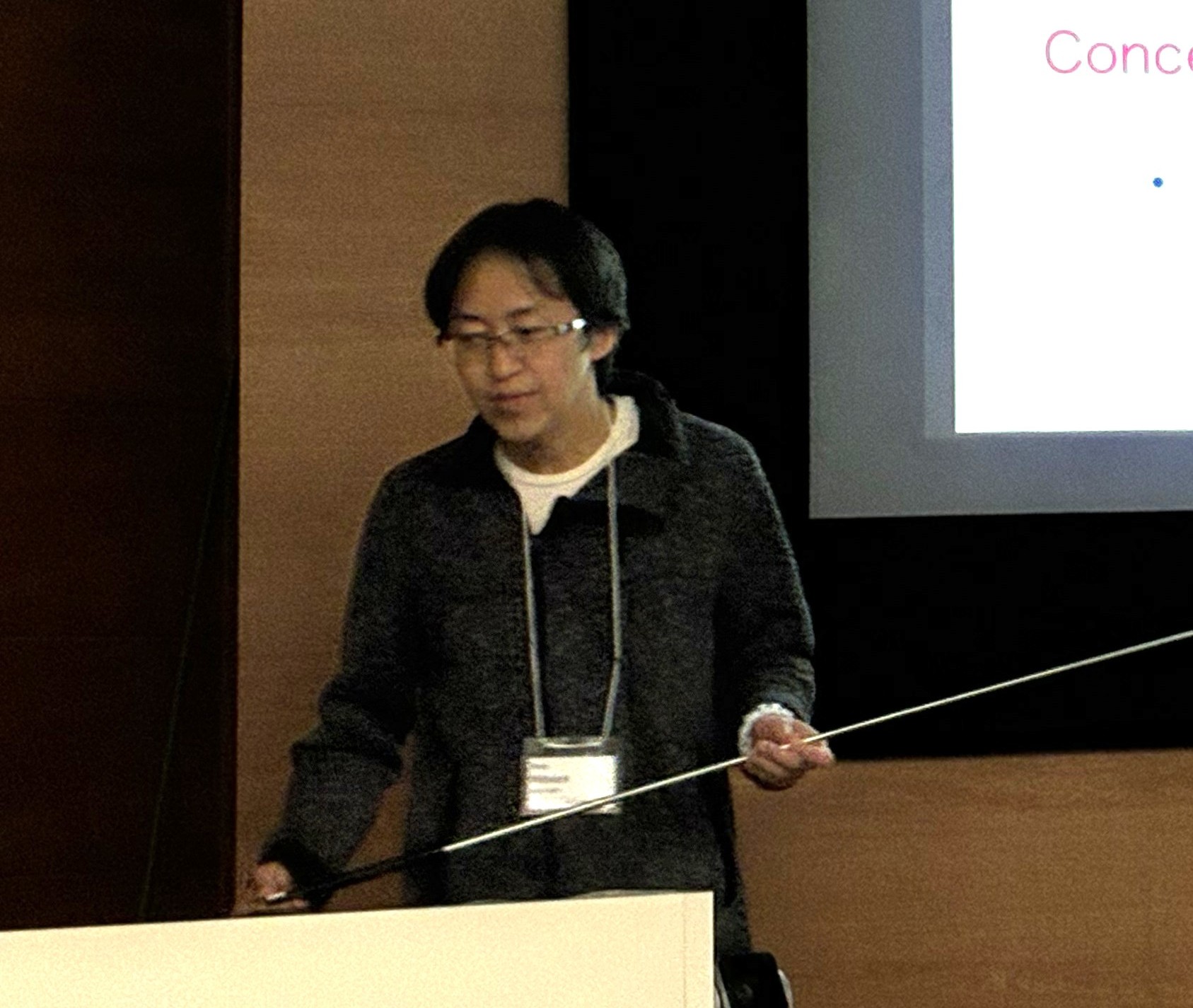
"Quantum State Transfer from Natural Systems via Hamiltonian Learning and Information Scrambling"
Understanding the Hamiltonian (the physical law) that governs a quantum system is fundamentally important both in basic science and in quantum technology. Traditionally, this problem has been approached indirectly: one first postulates a model Hamiltonian and derives its predictions, and then tests the validity of the model by comparing those predictions with experimental results. Although this approach is powerful, it relies heavily on prior theoretical assumptions and does not provide direct access to the underlying dynamics themselves. In recent years, the field of quantum computing has seen the development of a framework known as “Hamiltonian learning,” which aims to identify the dynamics of a quantum system directly from experimental data. However, standard methods typically assume that one can prepare arbitrary initial states of the entire system and perform complete measurements (tomography) over all degrees of freedom. While these assumptions are suitable for artificially and fully controlled quantum processors, they do not hold for complex quantum systems in nature. In natural systems, most degrees of freedom are experimentally inaccessible—effectively forming a black box. In this talk, I will discuss how we can overcome this barrier and to what extent the Hamiltonian of an unknown quantum system can be identified using only a small, accessible “probe” (detector). As an application of this learning approach, I will also explore a new paradigm that connects natural systems and quantum computers. Rather than collapsing unknown quantum states in nature into classical data through measurement, this paradigm envisions directly transferring and ingesting them into a quantum computer while preserving their quantum properties (coherence), thereby enabling further quantum processing.
- Djordje Minic (Virginia Tech) Link
Talk Slide
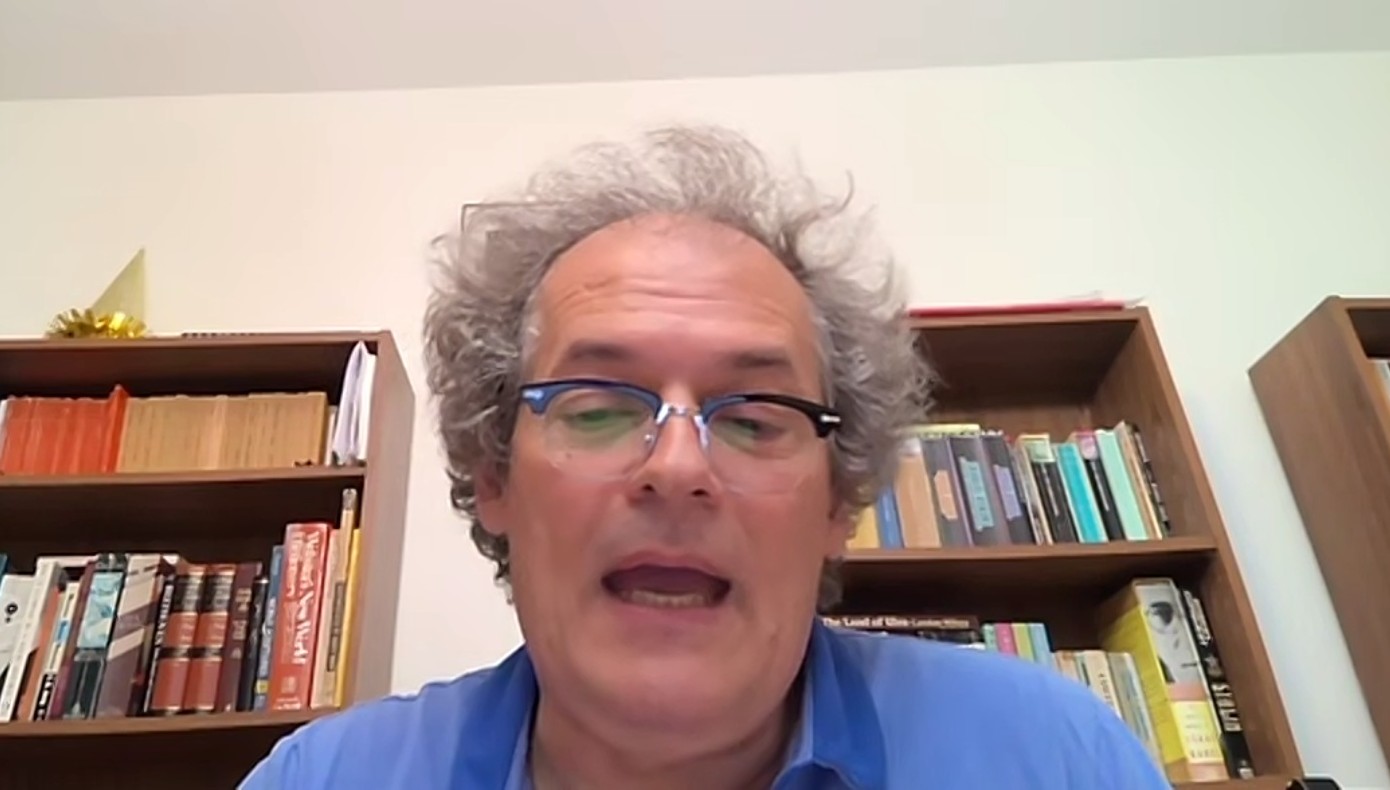
“Quantum gravity, quantum spacetime and gravitized quantum theory" (online)
Spacetime, as it is currently known in physics, is a classical concept, and our deepest theory of spacetime physics, general relativity, the classical relativistic theory of gravity, is a background independent theory of a dynamical spacetime geometry. Quantum theory, on the other hand, is the deepest theory we have of matter degrees of freedom, and it is currently formulated in a classical spacetime, as an intrinsically probabilistic, contextual theory of non-classical, interfering probabilities, with a fixed rule for computing those probabilities, called the Born rule. I will argue that the quantum nature of spacetime, which apart from classical spacetime also includes a dual spacetime that does not commute with classical spacetime, is the reason behind an intrinsically probabilistic and contextual nature of quantum theory, with the fixed Born rule. In the context of quantum gravity quantum theory is gravitized into a background independent structure with dynamical and contextual quantum probabilities. This proposal (quantum gravity = gravitized quantum theory) can be checked experimentally by looking for intrinsic triple interference (which is identically zero in quantum theory, as implied by the Born rule) in the context of massive quantum probes. I will also discuss an explicit realization of such a gravitized quantum theory as well as its empirical implications for the observed vacuum energy and the masses of elementary particles.
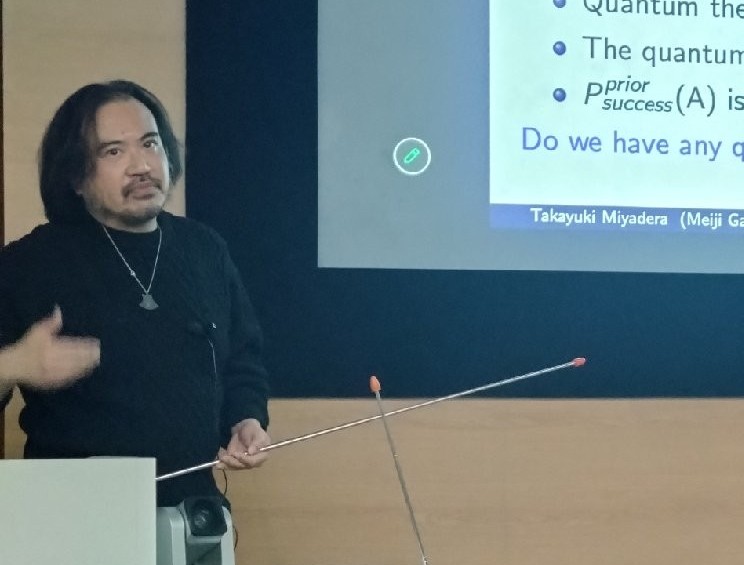
- Takayuki Miyadera (Meiji Gakuin University)Link
Talk Slide
"Quantum Incompatibility"
According to Heisenberg’s uncertainty principle, it is impossible to measure position and momentum simultaneously. Moreover, the no-cloning theorem implies that two clean channels cannot be executed simultaneously. Beyond these examples, quantum theory abounds with sets of operations that cannot be implemented at the same time—that is, incompatible sets of operations. In this talk, I will begin with the definition of incompatibility and introduce several qualitative methods for investigating it.
- Daniele Oriti (Complutense University of Madrid)
Link
Talk Slide
"Emergent spacetime and cosmology from quantum gravity"
I discuss the extraction of cosmological dynamics, for both background geometry and perturbations, from the group field theory formalism for quantum gravity. This emergent cosmology presents a number of physically interesting features, including a quantum bounce replacing the cosmological singularity, a late-time acceleration of purely quantum gravity origin, and an effective dynamics for cosmological perturbations with several aspects of potential interest for quantum gravity phenomenology.
I also outline the conceptual framework informing the derivation of cosmological dynamics, as well as the key aspects of the group field theory formalism for quantum gravity in which this derivation is performed, and conclude with a brief discussion of the many open issues left to be tackled in this context.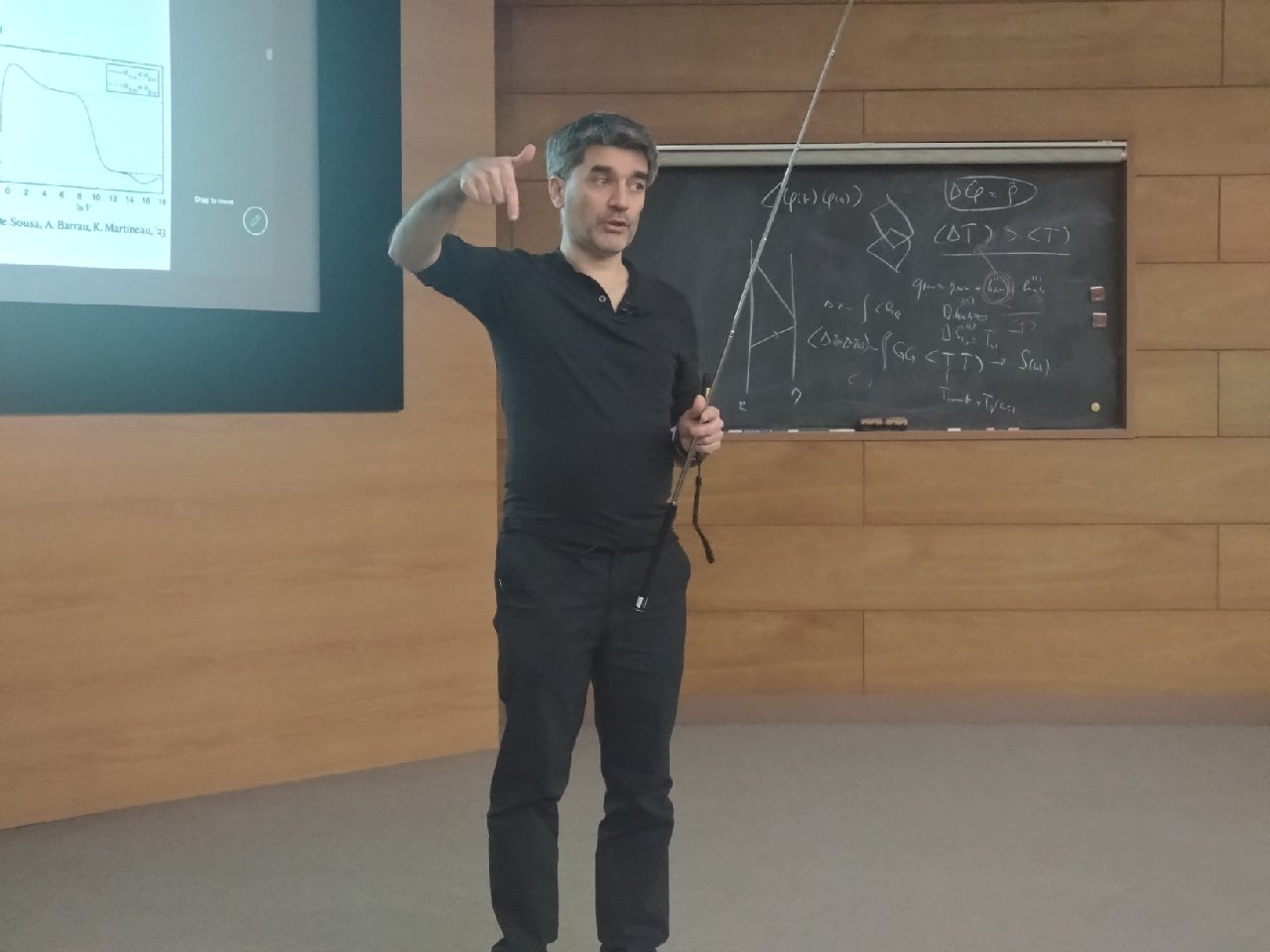
- Tamiaki Yoneya (University of Tokyo) Link
Talk Slide
"The Meaning of Spacetime in String/M Theory"
In the preliminary part of this talk, I will discuss some historical backgrounds to the UV difficulties of quantum field theory and outline how string/M theory has emerged as a prime candidate for the unified theory of all interactions including gravity which completely resolves the UV difficulty in a rather unexpected fashion. Then, I will proceed to the main part, elucidating the characteristic properties of quantum spacetime in string/M theory. A special emphasis will be put on the nature and meaning of UV completion achieved in string/M theory.
Short talks & Poster presentations
Short talks
Clelia Altomonte (King's College London) Talk Slide
"A Quantum Algorithm for Numerical General Relativity"
In this talk I will present the quantum algorithm for Numerical General Relativity I developed with Prof. Malcolm Fairbairn, and thus show how computationally expensive simulations performed on classical computers such as those of numerical General Relativity (nGR) can be more efficiently tackled by quantum algorithms for solving systems of partial differential equations (pdes), with the possibility to obtain a quantum advantage in terms of computational resources and speed up in runtime with respect to classical counterparts. I will explain the theoretical and practical aspects of this highly interdisciplinary project: from the identification of a suitable numerical General relativity formalism (the WEBB hyperbolic tetrad formalism), to the translation of the system of pdes into a set of quantum computing operations in the form of a quantum walk, the programming of the algorithm components for a gate-based digital quantum computer using the Qiskit software, the choice of a system to test it (Schwarzschild gravitational Quasinormal Modes), and the tests run on both classical simulators and physical IBM quantum computers through the UKRI National Quantum Computing Centre (NQCC) Quantum Access program. I will conclude how this project provides both the first algorithm for nGR for a digital quantum computer, the first application of the WEBB formalism to the study of QNMs, and how it is located in the landscape of Quantum Information applications for Gravity studies.
Srijit Bhattacharjee (Indian Institute of Information Technology Allahabad) Talk Slide
"Dynamical black holes and their entropy"
The traditional laws of black hole mechanics, formulated for stationary Event Horizons, often fall short in practical scenarios where black holes interact with their surroundings and become dynamic. This challenge has been effectively addressed through a quasi-local approach, focusing on trapped surfaces and their boundaries, which provides a more suitable setup for studying non-equilibrium black hole dynamics. In this talk, we outline some recent studies on the dynamical black holes, particularly focusing on Vaidya spacetimes. Further, we elucidate the implications of Conformal Killing Horizons for a wide class of Vaidya-like spacetimes, and discuss their thermodynamic properties.
Chong-Sun Chu (National Tsing Hua University) Talk Slide
"Large N quantum mehanical model of black hole"
Black holes pose sharp consistency questions at the interface of gravity, quantum mechanics, and thermodynamics. It is widely believed that resolving problems such as providing a microscopic account of Bekenstein-Hawking entropy, understanding the origin of black hole thermodynamics, and resolving the information paradox posed by Hawking radiation, among others, will provide key insights toward formulating a theory of quantum gravity. In this talk, I discuss a recent proposal of quantum black hole by in terms of a certain large N matrix quantum mechanics. In this model, black hole horizon in general relativity is replaced by a noncommutative fuzzy sphere geometry together with a quantized Fermi sea of states. The Berkenstein-Hawking entropy is understood in terms of the microstate counting of the vacuum degeneracy of the Fermi sea. The Hawking radiation is described consistently in terms of quantum mechanical tunneling of the metastable fuzzy sphere vacua, going beyond the usual semi-classical treatement.
Satoya Imai (University of Tsukuba)
"Chiral Symmetries and Multiparticle Entanglement"
Bosons and fermions are defined by their exchange properties and the underlying symmetries determine the structure of the corresponding state spaces. For two particles there are two possible exchange symmetries, resulting in symmetric or antisymmetric behaviour, but when exploring multiparticle systems also quantum states with chiral symmetries appear. In this work we demonstrate that chiral symmetries lead to extremal forms of quantum entanglement. More precisely, we show that subspaces with this symmetry are highly entangled with respect to the geometric measure of entanglement, leading to observables which can be useful for entanglement characterization. Along the way, we develop a simple method to solve the problem of genuine multiparticle entanglement for unitarily invariant three-particle states and use it to identify genuine multipartite entangled states whose partial transposes with respect to all bipartitions are positive. Finally, we consider generalizations with less symmetry and discuss potential applications.
Youka Kaku (Kobe University) Talk Slide
"A Cosmic Cat State and Decoherence in the Early Universe"
One of the open issues in cosmology is understanding how cosmological degrees of freedom—such as matter fields and spacetime—have classicalized by the present time, although they are fundamentally quantum in the early universe. In this talk, we discuss the decoherence of an FLRW universe induced through its interaction with quantum scalar fields, such as the inflaton. The quantum state evolution of the scale factor and the scalar field is treated within the Wheeler–DeWitt framework. We consider the macroscopic quantum superposition of two different cosmological constants, and then estimate the decoherence rate of its coherence due to a quantum fluctuation of an inhomogeneous scalar field.
Marius Ernst Hagen Krumm (University of Innsbruck) Talk Slide
"Variational quantum sensing using Unruh-DeWitt detectors"
When probing a complex quantum system, one may face the problem that there is no hand-crafted measurement protocol to extract quantities of interest. The field of variational quantum sensing tackles this problem by using quantum machine learning. More specifically, one lets a parameterized quantum circuit interact with the complex quantum system, and tunes the parameters such that the output measurement statistics gives the desired outputs. In my talk, I will present an extension of this approach to quantum field theory on curved spacetime. Here, the probes are modeled as Unruh-DeWitt detectors with tunable free Hamiltonian. Their interaction is mediated by the quantum field which also acts as the investigated complex quantum system. A physical regime is presented for which the quantum field induces a unitary globally entangling gate without acting as a source of noise. The resulting ""hardware efficient ansatz"" is universal for quantum computation.
Isaac Layton (University of Tokyo)
"Fixing semi-classical dynamics from first principles: how to derive effective classical-quantum dynamics from open quantum theory"
Semi-classical approaches aim to provide approximate descriptions of fully quantum theories in regimes where one degree of freedom is effectively classical. However, these approaches are also criticised, either because they violate basic physical principles or because they have limited regimes of validity. In this talk, I will show how the standard semi-classical dynamics can be made consistent and given unlimited validity, provided the original quantum dynamics is subject to a specific form of environmental decoherence. Using a simple toy model, I will show how studying the evolution of the fully quantum dynamics in a partial Wigner representation naturally leads to stochastic modifications of the semi-classical equations of motion without the usual approximations. Comparing to the standard semi-classical equations, I will explain how this novel approach can be used to provide a timescale for the validity of the standard semi-classical equations that depends on decoherence rates in the fully quantum theory. This work provides a blueprint for how semi-classical methods in gravity may be pushed beyond the current standard set of tools, and illustrates how recent proposals for hybrid classical-quantum gravity could in principle be reconciled with fully quantum theories of gravity.
Luca Marchetti (Kavli IPMU and OIST) Talk Slide
"Cosmic Acceleration from Quantum Gravity: Emergent Inflation and Dynamical Dark Energy"
Recent cosmological observations increasingly challenge the standard picture of cosmic acceleration, pointing toward an evolving dark-energy sector—possibly with phantom characteristics—and by placing considerable pressure on even the better-theoretically motivated inflationary models. In this talk, I present a new mechanism for cosmic acceleration arising from quantum gravity interactions in (mean-field) Group Field Theories (GFTs). Depending on the interaction type, the resulting cosmological dynamics can either feature a late-time attractor corresponding to a dynamical dark energy phase—often with characteristic phantom behavior, including in models inspired by simplicial gravity—or instead support an early slow-roll inflationary epoch driven by the same underlying quantum-gravitational effects. This emergent inflation, effectively captured by a single-field description, can sustain the required expansion, naturally avoids the graceful exit problem, and appears to transition into a persistent, non-accelerating phase consistent with classical expectations. I conclude by outlining prospects for further developments.
Jun Nishimura (KEK, SOKENDAI) Talk Slide
"Emergence of (3+1)-dimensional expanding spacetime from the Lorentzian type IIB matrix model"
I would like to present our recent numerical results suggesting the phenomenon in the Title based on complex Langevin simulations.
Emanuele Panella (University of Rome "Tor Vergata") Talk Slide
"CQ gravitational waves background"
In this short talk, I will argue in favour of studying hybrid classical-quantum models of gravity, in order to come up with indirect tests on the quantum nature of spacetime that do not require significant technological advances. In fact, under minimal assumptions, it has been shown that a general fundamentally classical theory of gravity needs to be stochastic, whilst also inevitably decohering spatial superpositions of masses. Crucially, both effects need to satisfy a decoherence-diffusion trade-off for consistency of the model, meaning that they cannot be made small. I will then showcase how such theories naturally predict a stochastic gravitational waves background, compute its spectrum, and show that, with current bounds from LIGO and table-top experiments, the decoherence-diffusion trade-off is already running the risk of being violated.
Francesco Sartini (OIST) Talk Slide
"Soft edges: the relationships between soft and edge modes"
Soft modes and boundary degrees of freedom play an important role in quantum gravity, holography, and celestial amplitudes. However, their description in asymptotic settings and in finite spacetime subregions is often developed separately. In this talk, I present a unified perspective that connects these viewpoints through a relational description of subsystems in gauge theories. The central idea is to interpret edge modes as reference frames built from the dynamical field content. This leads to a natural classification into intrinsic and extrinsic edge modes, the latter describing how a subregion is embedded in the rest of the system. The extrinsic sector universally extends the phase space through a gauge-invariant corner Goldstone pair whose physical symmetries correspond to reorientations of the reference frame. Using Maxwell theory as an example, I show how these reorientations provide a bridge between subregional and asymptotic soft physics: finite distance corner symmetries admit a relational interpretation as complement-supported operations corresponding to the addition of radiation or asymptotic gauge transformations.
Muhammad Taufiqi (Sepuluh Nopember Institute of Technology) Talk Slide
"Advances in Quantum Teleportation: Encryption, Steering and Nonlocal Certification, and Superiority in Noisy Quantum Networks"
This talk will briefly discuss quantum teleportation in qubit systems, particularly the controlled additions and behaviors associated with its underlying entanglement structure. It will also examine the security of the protocol, including extensions that enable encrypted teleportation. In addition, the talk will highlight developments related to quantum steering and Bell nonlocality, demonstrating how their interconnection with the protocol results in teleportation-based quantum steering and Bell-nonlocal certification. Furthermore, it will address the unification of teleportation with quantum error correction, leading to the concept of self-correcting teleportation. Finally, the talk will evaluate teleportation performance in noisy environments; specifically, it will compare the superiority of teleportation against direct quantum state transport, offering insights that could influence quantum repeater and network development by clarifying when teleportation is beneficial.
Julian De Vuyst (OIST) Talk Slide
"Linearisation instabilities and crossed products"
The discussion of observables in closed Universes has lately been at the forefront of many discussions. The algebra of such observables turned out to be a crossed product, consisting of system operators dressed to a quantum reference frame, and additionally providing us with an intrinsic regularisation of the entropy. Such a crossed product is the consequence of imposing boost constraints on our fields in a G_N to 0 limit. However, this is a second-order constraint we are imposing on a linearised theory, so this might seem unnatural. We will argue from the formalism of linearisation instabilities that this is the natural thing to do, especially in spatially closed spacetimes; although when boundaries are present this need not be a conclusive justification.
Poster sessions
1.Shun Arai (Kobayashi-Maskawa Institute, Nagoya) poster
"Wigner Function Shapelets"
By analysing the high-resolution astronomical image data obtained from the next-generation optical and radio telescope arrays, astrophysics and cosmology is expected to advance dramatically. In this study, we extend shapelets—a method long used for analysing celestial morphologies, particularly those of galaxies (A. Refregier 2001; R. Massey and A. Refregier 2004)—using the Wigner function (E. Wigner 1932). We construct a group-theoretical framework for morphological evolution that incorporates information from propagation equations, such as radiative transfer. We discuss potential applications to the analysis of real data
2.Tomohiro Fujita (Ochanomizu University)
"Quantum Field Theory of a Scalar Field in Superposed Gravitational Potentials"
We investigate the quantum field theory of a scalar field in a quantum superposition of gravitational potentials, where the causal structure of spacetime inevitably becomes state-dependent, allowing superpositions of space-like and time-like separations. Within a weak-gravity effective framework, we show that a consistent canonical description can be formulated without introducing new principles: equal-time canonical commutation relations remain fixed c-numbers, while microcausality necessarily becomes operator-valued and depends on the quantum state of the gravitational field. We illustrate this structure with an explicit 1+1-dimensional gravitational double-slit model and evaluate the gravitational decoherence.
3.Hideo Furugori (Kyoto Univeristy) Poster
"Apparent horizon associated with black hole entropy"
We define entropic marginally outer trapped surfaces (E-MOTSs) as a generalization of apparent horizons. We then show that, under first-order perturbations around a stationary blackhole, the dynamical black hole entropy proposed by Hollands, Wald, and Zhang, defined on the background Killing horizon, can be expressed as the Wall entropy evaluated on an E-MOTS associated with it. Our result ensures that the Hollands--Wald--Zhang entropy reduces to the standard Wald entropy in each stationary regime of a dynamical black hole, thereby reinforcing the robustness of the dynamical entropy formulation.
4.Tomoya Hirotani (Kyushu University) Poster
"Quantum fluctuations of geodesic deviation in Oppenheim’s relativistic semi- classical gravity model"
Recently, a novel semiclassical gravity model proposed by Oppenheim et al. has attracted considerable attention as a consistent model for describing interactions between quantum systems and classical gravity. However, the properties of this model have not yet been fully understood. In this work, based on the Oppenheim et al. model, we investigate the geodesic deviation of quantum particles coupled to a classical gravitational field with stochastic fluctuations. We analytically derive the Langevin equations of the geodesic deviation and calculate the gravitational strain spectrum estimated from the deviation. We then show that the Oppenheim et al. model, which introduces white-type noise, may be ruled out by observational data from gravitational-wave interferometers. Furthermore, noting that the physical origin of the stochastic fluctuations in the Oppenheim et al. model is not clear, we construct the new model in which effective fluctuations arise in a quantized gravitational field interacting with environmental quantum fields. We perform a similar spectral analysis for this model and present a detailed comparison with the Oppenheim et al. model.
5.Adil Imam (IIT Kanpur)
"Rotating Kaluza-Klein Black Holes in Einstein-Maxwell-Dilaton Gauss-Bonnet Gravity and Flat Directions"
We can compute the entropy for extremal black holes in String theory and Supergravity theories using Sen’s entropy function formalism, which is a formalism for the near-horizon geometry. We work with rotating extremal black holes in dimensionally reduced (5D to 4D) Kaluza-Klein theory coupled to a nontrivial Gauss-Bonnet term in four dimensions. We then compute the corrected black hole entropy using the entropy function formalism. Moreover, we can show the presence of two branches (ergo-free branch and ergo branch) in this theory, corresponding to different limiting cases of the full solution parameters, and we compute the entropy of both these branches explicitly. Next, we address the issue of flat directions along with the necessity of removing them from our theory, which is consistent with string theory and moduli stabilization. These directions are lifted by the addition of the higher-derivative corrections, in our case the Gauss-Bonnet term, which in turn allows us to verify the speculations made in hep-th/0606244 and 0706.1874 on the removal of flat directions through higher-derivative terms.
6.Marius Ernst Hagen Krumm (University of Innsbruck)
"Variational quantum sensing using Unruh-DeWitt detectors"
When probing a complex quantum system, one may face the problem that there is no hand-crafted measurement protocol to extract quantities of interest. The field of variational quantum sensing tackles this problem by using quantum machine learning. More specifically, one lets a parameterized quantum circuit interact with the complex quantum system, and tunes the parameters such that the output measurement statistics gives the desired outputs. In my talk, I will present an extension of this approach to quantum field theory on curved spacetime. Here, the probes are modeled as Unruh-DeWitt detectors with tunable free Hamiltonian. Their interaction is mediated by the quantum field which also acts as the investigated complex quantum system. A physical regime is presented for which the quantum field induces a unitary globally entangling gate without acting as a source of noise. The resulting "hardware efficient ansatz" is universal for quantum computation.
7.Masatoshi Kubota (Osaka Metropolitan University)
"Quantum Geometry in Non-compact Quantum Systems and Frame-Induced Quantum Phase Transitions"
In recent years, the Quantum Geometric Tensor (QGT), which represents the local geometric features of Hilbert space, has attracted significant attention. However, conventional definitions cannot be applied when the states do not belong to the Hilbert space. In this study, we construct quantum geometry for operator spaces and provide a new definition of the QGT that is applicable even when quantum states are outside the Hilbert space. Furthermore, using this newly defined QGT, we elucidate the geometric structure of quantum phase transitions associated with frame transformations.
8.Koichi Kyo (Kyoto University)
"Scattering Amplitudes in the Double Sigma Model"
The double sigma model provides a T-duality symmetric formulation of string theory, yielding Double Field Theory (DFT) in its low-energy limit. It is also called "double string" or, in more generalized contexts, "metastring". It is known that the model reduces to conventional string theory upon choosing a specific polarization of the doubled target space. In this poster, I investigate S-matrices of the double sigma model in comparison to ordinary strings and discuss their implications for the structure of quantum spacetime.
9.Elena Maria Giulia Landrò (Insubria University) Poster
"Intertwiners in Three-Dimensional Chern–Simons Theory"
We study the application of the intertwiner operator method to non-Abelian Chern–Simons theory in three dimensions, with particular emphasis on the role of non-local operators. Building on the general construction of the intertwiner as a map between a “free” (or asymptotic) BRST charge and the full interacting BRST charge, we analyze Chern–Simons theory on foliated manifolds while preserving covariance on the Cauchy surface. As anticipated in the introductory discussion, the canonical quantization of Chern–Simons theory naturally leads to the appearance of non-local structures, due to the decomposition of the gauge field into longitudinal and transverse components and to the absence of local propagating degrees of freedom. We show that the triviality of the local BRST cohomology in topological field theories implies that physical states and operators must be realized in non-local sectors of the functional space. We compare the canonical and holomorphic quantization schemes, highlighting how the latter provides a more natural framework for the construction of the intertwiner and for the assignment of the filtration underlying the BRST charge. Within this framework, the intertwiner establishes an explicit correspondence between the two quantizations and clarifies the emergence of non-local BRST-invariant observables. As an application, we show how the path ordering of non-Abelian Wilson loops arises naturally from the structure of the intertwiner, providing a unified perspective on non-locality, quantization, and observables in Chern–Simons theory.
10.Isaac Layton (University of Tokyo)
"Preserving the thermal state in mixed classical-quantum systems"
Many paradigms in physics and chemistry involve interacting classical and quantum variables, with notable examples including molecular dynamics and semi-classical black hole physics. However, much less is understood about the thermodynamics of these systems, including whether such semi-classical dynamics are generally compatible with the second law. In this work we describe how a basic first question in classical-quantum thermodynamics – is there dynamics that preserves the thermal state? – may be answered in the affirmative. This provides a method of constructing consistent semi-classical dynamics with a provable second law of thermodynamics, as well as a blueprint for how models of classical gravity may be constructed without excessive heating. The results are illustrated using two simple models: an analytically solvable model of a qubit coupled to an overdamped classical system, and an underdamped classical-quantum oscillator model.
11.Mayank (Indian institute of technology, Madras)
"Probing curved spacetime using bitensors"
Entanglement between accelerated detectors in curved spacetime provides a non-local probe of spacetime curvature. Such non-local observables have a covariant and geometric representation in terms of bitensors like Synge’s world function and van Vleck determinant, which can be computed exactly for maximally symmetric spacetime. I will demonstrate how entanglement exhibits a distinct dependence on curvature and acceleration in de Sitter, thereby separating detector kinematics from background curvature. I will also discuss the behavior of these bitensors near FLRW and Bianchi Type I singularities, including exact series expansions for the world function and the limiting behavior of the van Vleck determinant and related quantities, providing insights into the causal structure near singularities. Together, these results highlight bitensors as computable probes in strong-gravity and quantum regimes.
12.Andres Gonzalez Morales (University Carlos III of Madrid) Poster
"Holography in General Discrete Spacetimes: Cochain Quantum Fields on Simplicial Screens"
This poster introduces a discrete framework for holographic screens in which both bulk semiclassical geometry and boundary theory are modeled on simplicial complexes. The bulk is described by a finite Lorentzian simplicial complex with a metric-compatible discrete Hodge star, while a codimension-2 leaf of a holographic screen is equipped with a quantum field theory whose kinematical configuration space is the cochain complex of the leaf. Bulk extremal surfaces anchored to leaf subregions define an area-based geometric entropy functional, which is then used to constrain the von Neumann entropies of reduced states on the leaf. The resulting construction is employed to explore the structure of the holographic screen theory and how semiclassical geometry is encoded in entanglement in a discrete setting.
13.Naoya Ogawa (Tokyo Woman's Christian University) Poster
"Time as a Measurement-Induced Operator: The Lee–Tsutsui Formalism with a Gaussian Wave-Packet Basis"
Time is a subtle concept in quantum mechanics: it is usually treated as an external parameter, and the existence of a self-adjoint time operator is constrained by Pauli’s theorem, although Aharonov and Bohm introduced a symmetric operator associated with the time of arrival. In recent years, Lee and Tsutsui have proposed a measurement-theoretic framework for uncertainty relations in which a quantum measurement induces a map from classical observables (real functions on the outcome space) to quantum observables (operators on the system Hilbert space). This map is called the Lee–Tsutsui adjoint, or pullback. We refer to this framework as the Lee–Tsutsui (LT) formalism. In parallel, a Gaussian wave-packet basis enables the construction of realistic finite-resolution measurement models. In this talk, we first review our previous results on position and momentum obtained by applying the LT formalism to a Gaussian wave-packet measurement model. We then present our recent result for time: by combining the LT formalism with a Gaussian wave-packet basis, we construct a time operator as a pullback operator and discuss its properties.
14.Goncalo Araujo Regado (OIST)
"How to make the universe tick"
The Page-Wooters (PW) mechanism provides a relational notion of physical time evolution in setups with time reparametrization invariance. This gives a conceptual resolution to the "problem of time" in quantum gravity. There are many diffeomorphism-invariant notions of time evolution, relative to different choices of "clock" degrees of freedom. The aim of this talk is to implement one such intrinsic notion of time in the context of the AdS/CFT correspondence. Namely, we will be working in the setup of 1+1-dimensional Jackiw-Teitelboim (JT) gravity coupled to matter, whose holographic dual is well-understood. We consider a fixed boundary corner and its associated bulk causal diamond, which we foliate into constant-mean-curvature (CMC) slices. This foliation provides an intrinsic clock degree of freedom: the extrinsic curvature of the bulk spatial slice. We show how to obtain a physical time evolution of the matter and other geometric degrees of freedom relative to this clock. Crucially, this is not a gauge evolution, even though the boundary corner is held fixed. We then explain how to implement this physical flow in the dual boundary theory, via certain operator insertions at the corner. This provides an important new entry into the holographic dictionary, allowing one to access intrinsically-defined bulk time evolution from the boundary, further casting light on the emergence of spacetime from the dual theory.
15.Harkirat Singh Sahota (Indian Institute of Technology, Madras) Poster
"Aspects of quantum cosmology with a reference fluid: Ambiguities and their imprints"
The canonical quantization of general relativity is riddled with issues at the formal level, e.g., the problem of time, choice of ordering, observables, etc. We address these issues and investigate the imprints of ambiguities appearing in the quantization of a flat-Friedmann-Lemaître-Robertson-Walker model with reference fluid. The standard approach to incorporate the quantum gravity effects into the semiclassical analysis is to adopt an effective geometry from the QG model representing the quantum-corrected regular spacetime. Since the relevant observables are usually made out of conjugate variables that do not commute in QG, the expectation value of only one variable might not suffice. This ambiguity in the notion of effective geometry is studied for the case of a perfect fluid dominated universe. A generalized ordering scheme for the Hamiltonian is considered, and we study the implications of different ordering choices on the dynamics of the quantum Universe. We demonstrate that the imprints of the operator ordering ambiguity are minimal, and quantum fluctuations are small in the case of sharply peaked states, leading to a consistent notion of a quantum-corrected spacetime defined via the expectation value of the scale factor. Surprisingly, the ordering imprints survive far away from the singularity through the quantum fluctuations in the quantum-corrected spacetime for broadly peaked states.
16.Leonardo Sanhueza (Universidad de Concepción)
"Null foliations on conformally compactified spacetimes"
Null foliations of asymptotically flat spacetimes are especially well suited for describing the physics at the conformal boundary, since null infinity is itself a null hypersurface. Using such a foliation, one can explicitly track how intrinsic geometric structures evolve and asymptote to null infinity. In this talk, we study null hypersurfaces approaching null infinity in conformally compactified spacetimes within the Bondi-Sachs gauge using Carrollian geometry. We show that the intrinsic dynamical equations on null hypersurfaces, namely Raychaudhuri and Damour equations, give rise to the Bondi mass-loss formula and the angular momentum equation. Additionally, we construct the null Brown-York tensor and analyze the gravitational phase space at finite distance, in order to find the associated asymptotic charges in the null infinity limit.
17.Taishi Sano (Waseda university)
"Schrödinger Symmetry in Static Spherically-symmetric Mini-superspaces with Matter Fields"
The hydrodynamic approximation has been proposed as a promising scenario for the emergence of spacetime in quantum gravity. A key piece of supporting evidence is the realization of Schrödinger symmetry—a typical emergent symmetry—in various minisuperspace models. However, previous studies have been largely limited to simple two-dimensional minisuperspace systems, such as FLRW cosmology or vacuum black holes. Therefore, exploring whether this symmetry persists in more complex systems offers a valuable test for the generality of this framework.
In this poster, based on the research with Yuki Yokokura (KEK) [arXiv:2512.13651v2 [gr-qc]], I will present results on static spherically symmetric minisuperspace coupled with matter fields. These systems are structurally richer than vacuum models, classically describing diverse physical phenomena such as charged black holes and naked singularities. We identify a three-dimensional Schrödinger symmetry in two specific cases: (i) a system containing an electromagnetic field with a cosmological constant, and (ii) one containing a massless scalar field. Notably, while the symmetry is realized under different choices of the lapse function for these two cases, we find that the vacuum Schwarzschild minisuperspace exhibits a two-dimensional Schrödinger symmetry under both lapse choices as distinct realizations. Our findings suggest that Schrödinger symmetry is a robust feature extending beyond simple vacuum models, thereby strengthening the correspondence between gravity and quantum hydrodynamics.
18.Fumiya Sano (Institute of Science Tokyo) Poster
"Decoherence of primordial perturbations in the view of a local observer"
We study quantum decoherence of curvature perturbations at superhorizon scales caused by the gravitational nonlinearities. We show that cubic gravitational couplings, constrained by the spatial diffeomorphism invariance, lead to infrared (IR) and ultraviolet (UV) divergences in the decoherence rate at one loop. These divergences arise from fluctuations of deep IR modes which look like a background mode for a local observer and violent zero-point fluctuations in the deep UV, respectively. We argue that these divergences are unobservable, as they vanish when considering proper observables. We consider correlators defined using the geodesic distance for IR divergences and time-averaged correlators for UV divergences. To account for these observer's perspectives, we propose to consider an effective quantum state, defined in terms of actual observables, as a more appropriate probe of the quantum coherence of the system measured by an observer. We then evaluate the finite decoherence rate induced by superhorizon environment during inflation and at late universe. This talk is based on the paper arXiv:2504.10472.
19.Keito Shimizu (Kyoto university)
"Boundary electromagnetic duality (tentative)"
We revisit boundary electromagnetic duality (tentative).
20.Yuka Shiomatsu (Ochanomizu University)
"Boosting Gravity-Induced Entanglement through Parametric Resonance"
Whether gravity is quantum or not is one of the biggest unsolved problems in modern physics. To address this question experimentally, recent proposals such as the BMV experiment aim to test for gravity-mediated entanglement. However, gravity is an extremely weak interaction, and it takes a long time for measurable levels of quantum entanglement to be generated, during which decoherence tends to destroy it. Our research proposes a method to overcome these issues by using parametric resonance to rapidly amplify the generation of gravity-induced entanglement. We model a system of two gravitationally coupled oscillators and show that by operating in an instability region, entanglement can be generated exponentially, reaching a measurable level in a short time.
21.Muhammad Taufiqi (Sepuluh Nopember Institute of Technology) Poster
"On the Quantum Teleportation Superiority in Noisy Environments"
Quantum teleportation needs a pre-shared entanglement; that entanglement distribution needs a quantum channel connecting the sender and receiver. If the primary goal is quantum state transmission, why not send the state directly instead of using it for entanglement pre-distribution? While quantum teleportation is often considered superior, no work has explicitly shown that superiority. To explore this, we developed a toy model incorporating bit-flip, phase-flip, depolarizing, amplitude-damping, and phase-damping noise. We assumed that the decoherence rate parameters are linearly proportional to distance or time. We calculated the fidelity of the teleported state affected by these noises and compared it to that of direct state transmission, which serves as the benchmark for evaluating teleportation performance. Our results showed that teleportation performs better in distance-dependent scenarios, but not in time-dependent ones. In the latter, teleportation is superior at higher noise parameters but loses its superiority in the lower noise parameters. Lastly, we briefly discuss a physical system that may be compatible with the proposed noise toy model. The findings could influence quantum repeater and network development by clarifying when teleportation is beneficial.
22.Takuya Yoda (Kyoto University) Poster
"String wave packets and termination of Hawking radiation"
One of the high-energy regimes explored in string theory is the near-horizon region of black holes. It is expected that Hawking radiation is emitted from this region, and stringy corrections to this Hawking radiation have been extensively studied. However, these corrections to the radiation spectrum have long been thought to be extremely small. Recently, a new perspective has been proposed: while corrections to the radiation spectrum indeed remain small, it has been argued that large corrections may arise in the time dependence of the radiation intensity. As a result, the intensity of Hawking radiation is expected to rapidly decay after the scrambling time, eventually leading to the termination of Hawking radiation. Since this prediction is based on string-inspired models, it remains necessary to derive it more directly from string theory itself. In this talk, we regard black hole formation and evaporation as string scattering processes and focus on the emission time of wave packets, that is time-delay, as means to support this prediction. Relation to the spacetime uncertainty principle will also be discussed.
Best Poster Awards
Shun Arai (Kobayashi-Maskawa Institute, Nagoya)
“Wigner Function Shapelets”
Hideo Furugori (Kyoto University)
“Apparent horizon associated with black hole entropy”
Yuka Shiomatsu (Ochanomizu University)
“Boosting Gravity-Induced Entanglement through Parametric Resonance”
Program
March 9 — 12, 2026
The workshop will start at 10:00 on March 9th and end at 17:00 on March 12th.
Timetable(PDF)Monday 9th
| 9:30-10:00 | Discussion with coffee | |
| 10:00-10:30 | Registration | |
| 10:30-10:45 | Opening | |
| 10:45-11:45 | Talk1 | Philipp Höhn |
| 11:45-12:15 | Break | |
| 12:15-13:15 | Talk2 | Ginestra Bianconi |
| 13:15-14:45 | Lunch @ Kenkyu Honkan Bldg. | |
| 14:45-15:45 | Talk3 | Shunji Matsuura |
| 15:45-16:15 | Break | |
| 16:15-17:15 | Short talk session1 |
Satoya Imai Julian De Vuyst Francesco Sartini |
| 17:30-19:30 | Poster session @ Kenkyu Honkan Bldg. |
Tuesday 10th
| 9:30-10:00 | Discussion with coffee | |
| 10:00-11:00 | Talk4 | Adrian Kent |
| 11:00-11:30 | Break | |
| 11:30-12:30 | Talk5 | Akira Matsumura |
| 12:30-14:00 | Lunch @ Kenkyu Honkan Bldg. | |
| 14:00-15:00 | Talk6 | Hidetoshi Katori |
| 15:00-15:30 | Break (photo session) | |
| 15:30-16:30 | Talk7 | Marios Christodoulou |
| 16:30-16:50 | Break | |
| 16:50-17:50 | Talk8 (online) | Bob Coecke |
| 18:10-21:00 | Reception |
Wednesday 11th
| 9:30-10:00 | Discussion with coffee | |
| 10:00-11:00 | Talk9 | Daniele Oriti |
| 11:00-11:30 | Break | |
| 11:30-12:30 | Talk10 | Laurent Freidel |
| 12:30-14:00 | Lunch | |
| 14:00-15:00 | Talk11 | Takayuki Miyadera |
| 15:00-15:30 | Short talk session2 |
Luca Marchetti Youka Kaku |
| 15:30-16:00 | Break | |
| 16:00-17:00 | Short talk session3 |
Isaac Layton Emanuele Panella Srijit Bhattacharjee Chong-Sun Chu |
| 17:00-17:10 | Break | |
| 17:10-18:10 | Talk12 (online) | Fay Dowker |
Thursday 12th
| 9:30-10:00 | Discussion with coffee | |
| 10:00-11:00 | Talk13 (online) | Djordje Minic |
| 11:00-11:30 | Break | |
| 11:30-12:30 | Short talk session4 |
Clelia Altomonte Muhammad Taufiqi Marius Ernst Hagen Krumm Jun Nishimura |
| 12:30-14:00 | Lunch | |
| 14:00-15:00 | Talk14 | Tamiaki Yoneya |
| 15:00-15:30 | Break | |
| 15:30-16:30 | Panel discussion | |
| 16:30-17:00 | Poster award and Closing |
Venue and Access
Venue
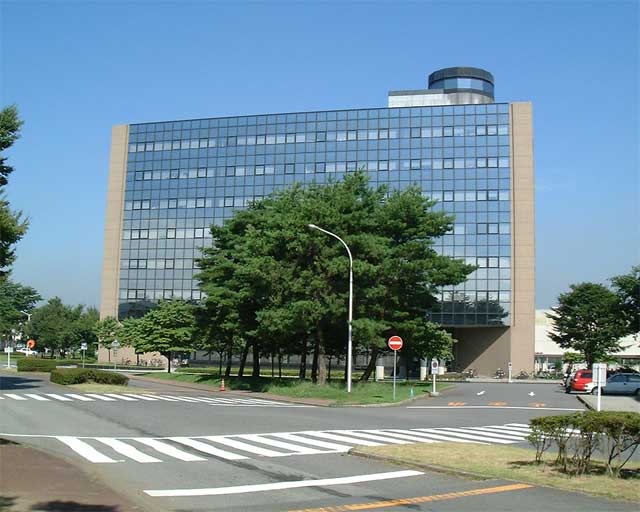
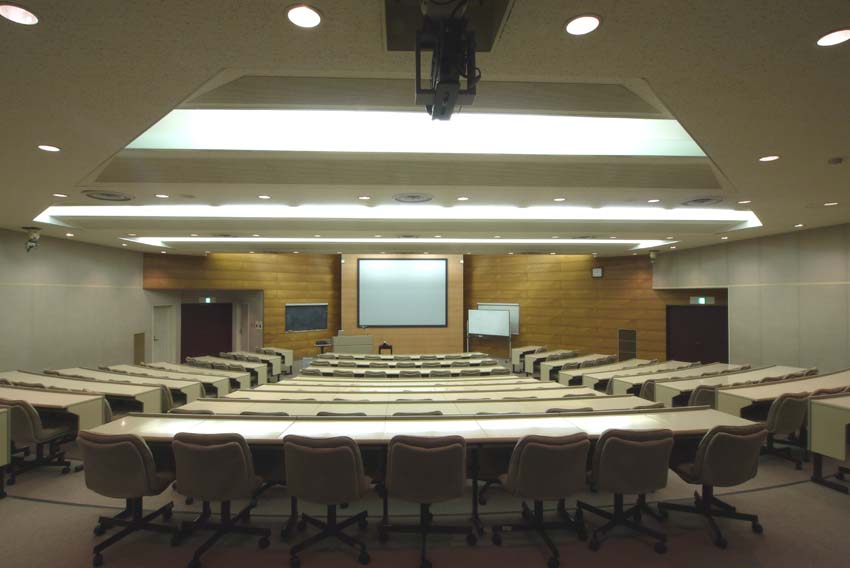
Seminar Hall on the ground floor at San-Go-Kan Building (Building 3),K03,
High Energy Accelerator Research Organization (KEK), 1-1 Oho, Tsukuba, Ibaraki 305-0801 Japan.
- The main venue is San-Go-Kan Building (Building 3) in Zone K.
- The venue for the 1st/2nd day's lunch and the poster session is Kenkyu-Honkan Building in Zone M.
KEK Campus Map (Please check ZONE-K & ZONE-M in the table.)
Google Map (San-Go-Kan Building)
Google Map (Kenkyu-Honkan Building)
Access
Bus Timetable: Tsukuba Center ⇄ KEK Bus Stop
Transportations
Suica and PASMO (prepaid travel cards)
Useful information around KEK
Restaurants; Around KEK & non-Japanese and Vegetarian Restaurants
Registration
This workshop is in-person only.
Registration fee: ¥20,000
See Registration Form for details.
Contributions
We welcome applications for short talks and poster presentations.
Important Days (Japan Standard Time)
Accommodation
Please see this link for KEK dormitory reservations and a list of nearby hotels.→Hotel & KEK dormitoryCode of Conduct
Please see this link for our code of concuct.→ Code of ConductOrganizers
Yuta Hamada (KEK), Shoji Hashimoto (KEK), Puttarak Jai-akson (RIKEN), Christy Kelly (RIKEN), Amaury Micheli (RIKEN), Kyohei Mukaida (KEK), Wei-Hsiang Shao (RIKEN), Yutaka Shikano (University of Tsukuba), Yuko Urakawa (KEK), Yuki Yokokura (Chair, KEK/RIKEN)Inquiries
Ms.Makiko Ohishi, Secretary, Theory Center, IPNS, KEK.makiko[at]post.kek.jp
Advisory
Satoshi Iso (RIKEN/KEK), Shoji Hashimoto (KEK), Yoshimasa Hidaka (Kyoto University/RIKEN), Shigehiro Nagataki (RIKEN)
Sponsors
Hosted by: KEK Theory Center, RIKEN iTHEMS